


The Role of Watch Band in Outfit: A Style Guide
The role of watch band in outfit styling is to act as the primary visual connector between your timepiece and everything you wear. Like a belt or a pair of shoes, the band either pulls a look together or quietly undermines it. The watch band occupies more wrist surface area than the watch case itself, making it the dominant textile element on your wrist. That means your band choice carries real weight in how polished, casual, or put-together your overall look reads. This guide breaks down exactly how to use that to your advantage.
How the role of watch band in outfit coordination works
The watch band is not a neutral background element. It is the most visible accessory during social interactions, moving with every gesture and drawing the eye toward your wrist. That visibility makes it a subtle but powerful signal of personal attention to detail. A mismatched band reads as an oversight. A well-chosen one reads as intention.
Material is the first decision. Each material carries a clear style message and belongs to a specific occasion category. The four primary strap materials map directly to occasion types: leather for formal wear, suede or mesh for smart casual, fabric or NATO for casual, and rubber or silicone for active wear. That framework removes guesswork and gives you a reliable starting point for any outfit.
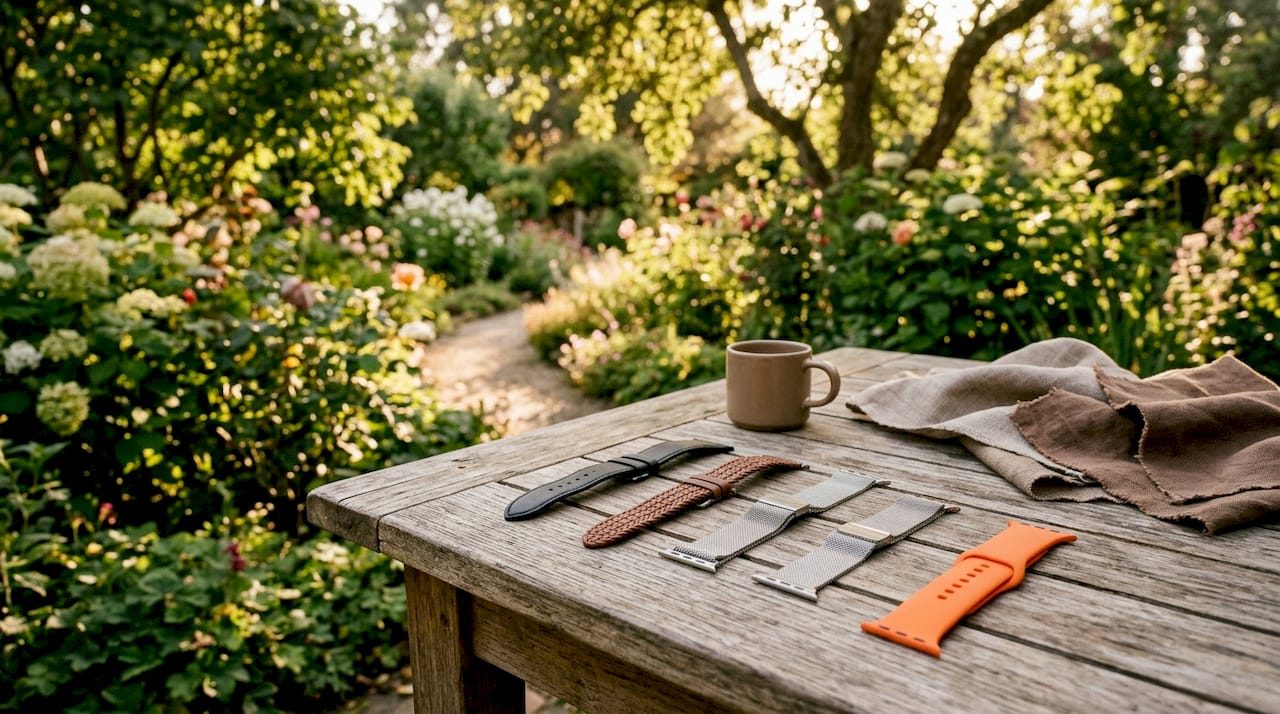
Color coordination follows a simple rule for leather bands. The 1:1 leather matching standard requires your band color to align with your belt and shoes. Black leather band with black shoes and belt. Brown band with brown leather goods. This is the foundational rule for formal and professional dressing in 2026, and breaking it reads as a styling error rather than a creative choice.
| Material | Best occasion | Color approach |
|---|---|---|
| Leather | Formal, business | Match to belt and shoes exactly |
| Stainless steel | Smart casual, office to evening | Match to other metal hardware |
| Suede or mesh | Smart casual, relaxed tailoring | Complement outfit tones |
| Fabric or NATO | Casual, weekend | Contrast or coordinate freely |
| Rubber or silicone | Active, summer, outdoor | Match to sportswear palette |
Stainless steel bands deserve special mention for their flexibility. Steel bracelets provide durability and a clean transition between casual and formal wear. They work in a boardroom and at a weekend brunch without looking out of place in either setting. The key is matching the metal finish to other hardware you are wearing, such as belt buckles, bag clasps, or shoe details. Metal accessories should reflect or complement each other to avoid visual clashes.
Leather bands also age in a way no other material does. Leather straps develop unique patinas over time, adding character and a sense of personal history to your look. A matte finish reads as understated and refined. A glossy finish adds polish and formality. That texture difference changes the overall feel of an outfit even when the color stays the same.
Why watch bands are essential tools for personal expression
The watch band shapes how others read your style before you say a word. Changing your band is the fastest way to shift the formality of a look without changing a single clothing item. Swap a leather band for a colorful silicone one and the same watch goes from boardroom to weekend instantly. That kind of versatility is rare in accessories.
Color psychology plays a real role in how your band reads against your outfit. Neutral tones like black, tan, and gray project sophistication and work with almost any palette. Bold colors like cobalt, red, or forest green convey creativity and confidence. The styling principle is straightforward: pair a calm, monochrome outfit with a colored band to add personality, and pair a busy or colorful outfit with a neutral band to keep the look balanced.
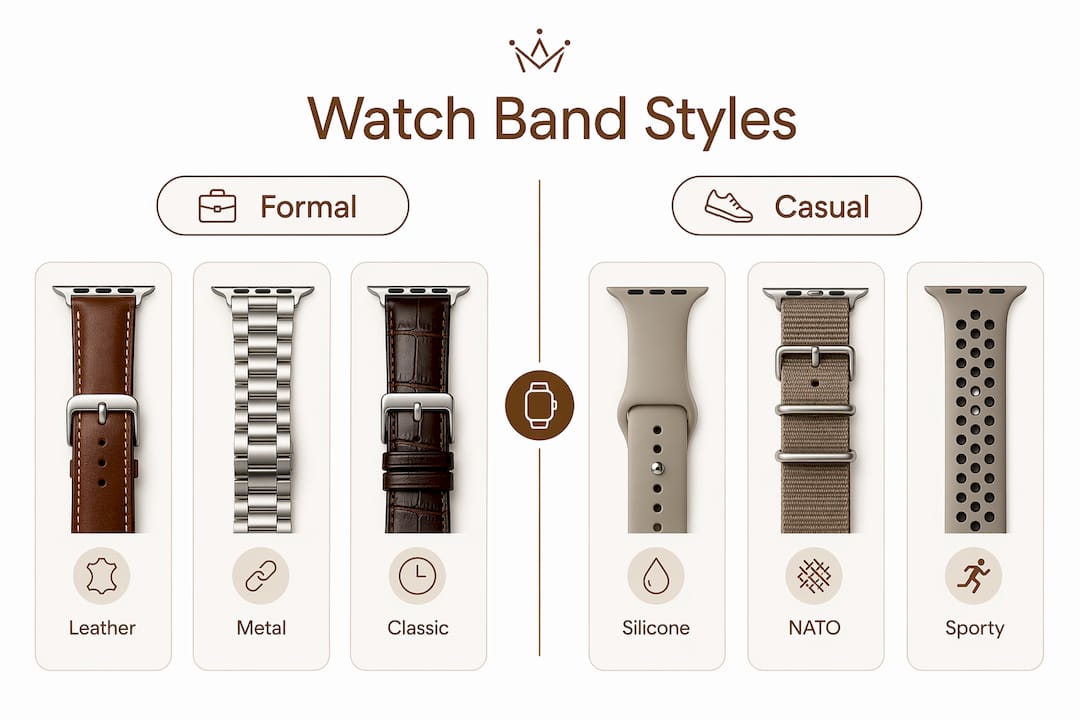
The strap swap is an underutilized style trick that delivers maximum outfit versatility from a single timepiece. Most people invest in one band and wear it indefinitely. Owning three or four bands in different materials and colors gives you a complete accessory wardrobe at a fraction of the cost of buying multiple watches. The stylish bands for women category has expanded significantly, with metal, leather, and silicone options now designed specifically to complement women’s fashion rather than adapt from men’s styles.
Here is what a small band rotation looks like in practice:
- A black leather band for workdays and formal events
- A stainless steel link band for smart casual and evening wear
- A silicone band in a neutral or accent color for weekends and active days
- A fabric or NATO band for travel, casual outings, and summer looks
Pro Tip: When building your band collection, start with one neutral metal band and one leather band. Those two cover roughly 80% of occasions. Add color and texture from there based on your actual wardrobe palette.
Practical tips for matching watch bands with different outfits
Matching your band to your outfit does not require a style degree. It requires a clear framework and a few consistent rules applied across occasion types.
-
Formal occasions. Choose a black or dark brown leather band and match it exactly to your shoes and belt. The Apple Watch bands for formal wear category covers this well, with slim leather straps that sit flush against dress attire without adding bulk. Avoid metal bands at black-tie events unless the case and band are both high-polish gold or silver.
-
Professional and office wear. Stainless steel or a refined leather band in black or cognac works best. The band should complement your bag hardware and any jewelry you wear. Apple Watch bands for work in metal finishes like Rose Gold or Silver Gold read as polished without being overdressed. Keep proportions in mind: a band that is too wide or too thin relative to the watch case disrupts the visual balance of the whole wrist.
-
Smart casual. Suede, vintage leather, or a Milanese mesh band pairs well with relaxed tailoring, blazers over jeans, or midi dresses. These materials sit between formal and casual without committing to either. A warm tan suede band with a cream blouse and tailored trousers is a complete, cohesive look on its own.
-
Casual and weekend. Colorful NATO bands, canvas straps, or a bright silicone band work here. Pair them with jeans, sneakers, and relaxed tops. This is where you can experiment with color contrast. A coral silicone band against a white linen outfit reads as intentional and fresh.
-
Active and summer wear. Rubber or silicone bands are the right call for water resistance, comfort, and durability. Choose a color that picks up an accent from your activewear or swimwear. The Bronte Silicone Strap from Wizeband comes in 19 colors, which makes it easy to find one that coordinates with your existing wardrobe.
Pro Tip: Avoid mixing warm and cool metal tones on the same wrist. If your watch case is rose gold, your band hardware, rings, and bracelet should all stay in the warm metal family. Mixing silver and gold hardware on one wrist reads as unintentional rather than eclectic.
The most common mistake is ignoring the band entirely and defaulting to whatever came in the box. The second most common mistake is choosing a band based on the watch alone rather than the outfits you actually wear. Always start with your wardrobe, not your watch.
How quick-release mechanisms change the way you style your watch
Quick-release spring bars make band swapping practical rather than aspirational. Band changes take under 60 seconds without any tools. That speed removes the friction that stops most people from swapping bands in the first place. When changing a band takes less time than choosing a pair of earrings, it becomes a real part of your daily routine.
The practical benefits of owning multiple bands are significant:
- One watch covers every occasion from gym to gala
- You spend less than you would buying multiple watches for different looks
- You can update your style seasonally without replacing the watch itself
- Fit adjustments become easy, especially with link-removal tools that let you size a band at home
Fit matters as much as style. Overly bulky or too-thin straps undermine an outfit’s visual balance regardless of how well the color matches. A band should sit flush against the wrist with no gaps and no pinching. Wizeband’s quick-adjust system lets you dial in the fit without sending the band out for resizing. That combination of fast swaps and precise fit makes daily band rotation genuinely easy.
Owning multiple watch bands allows daily adaptation of your watch style to match different outfit energies and occasion requirements. Luxury watch collectors have done this for decades. The same principle applies to Apple Watch wearers who want their tech accessory to function as a fashion accessory.
Key Takeaways
The watch band is the single most impactful accessory swap you can make to change how a complete outfit reads, and material, color, and fit are the three variables that determine whether it works.
| Point | Details |
|---|---|
| Band material signals occasion | Match leather to formal, steel to smart casual, silicone to active wear. |
| Color coordination follows a rule | Align leather band color 1:1 with belt and shoes for professional looks. |
| Metal hardware must match | Coordinate band metal finish with buckles, rings, and bag hardware. |
| Multiple bands multiply versatility | Three to four bands cover every occasion from a single watch. |
| Fit affects style as much as color | A band that is too wide or too thin disrupts the visual balance of the wrist. |
Why I stopped treating watch bands as an afterthought
For years, I wore the same band every day regardless of what I had on. A black rubber strap with a silk blouse and tailored trousers. A leather band at the gym. The watch looked fine, but the wrist never looked finished. The moment I started treating the band as a deliberate accessory choice, the whole outfit read differently. People noticed the watch more, not less, because it fit the look instead of fighting it.
The insight that changed my approach was simple: the band covers more wrist than the watch face does. That means the band is doing more visual work than the watch itself. Once you see it that way, leaving the band choice to chance feels as careless as wearing mismatched shoes. The watch band choice matters more than most people realize, and the gap between a thoughtful choice and a default one is visible to anyone paying attention.
My advice is to start with your three most-worn outfits and work backward. What band material fits each one? What color? That exercise usually reveals that two or three bands cover your entire wardrobe. From there, adding a fourth for special occasions or seasonal variety is easy and inexpensive compared to any other accessory investment.
— John
Wizeband’s band collections for every outfit occasion
Wizeband designs premium metal Apple Watch bands that function as jewelry and wear as everyday accessories. Every band is crafted from 316L stainless steel with butterfly clasps and quick-adjust systems, compatible with Apple Watch Series 4–10, SE, and Ultra 2.
The Wizeband Essentials Bundle gives you a curated set of bands across materials and finishes, covering formal, smart casual, and everyday looks from one purchase. Finishes include Silver Gold, Rose Gold, Starlight, and Gold. If you are starting fresh, the Swift Leather Strap is a strong first pick for professional and formal wear. Wizeband’s two-size system removes the guesswork at checkout, and the quick-release design means you can swap between looks in under a minute.
FAQ
What is the role of a watch band in an outfit?
The watch band connects your timepiece visually to your clothing by matching its material, color, and texture to the rest of your accessories. It functions like a belt or shoes, either unifying a look or disrupting it.
How do I match a watch band color to my outfit?
For leather bands, match the band color exactly to your belt and shoes. For metal bands, match the finish to other hardware you are wearing, such as buckles, rings, or bag clasps.
What watch band material works best for professional wear?
Stainless steel and leather are the two best materials for professional settings. Steel transitions from office to evening without changing, while leather in black or dark brown pairs cleanly with formal business attire.
Can changing a watch band really change an outfit?
Yes. Swapping a leather band for a silicone or NATO band shifts the same watch from formal to casual instantly. The band change takes under 60 seconds with a quick-release mechanism and requires no tools.
How many watch bands should I own?
Three to four bands cover most wardrobes: one leather for formal, one metal for smart casual, one silicone for active wear, and one fabric or NATO for casual and weekend looks.
Recommended
Aus dem Blog
Alle anzeigen


Hinterlassen Sie einen Kommentar