


How to Customize Your Apple Watch With Jewelry-Style Bands
You can make your Apple Watch look and wear like jewelry by choosing a 316L stainless steel or ceramic band with a butterfly or jewelry clasp, sized to the correct Apple Watch case group. That single decision changes the watch from a fitness tracker into a wrist accessory worth noticing.
Three things to confirm before you buy:
- Material: 316L stainless steel for daily durability; ceramic for a dressier, high-gloss look
- Clasp: butterfly or jewelry clasp for a seamless, bracelet-like profile
- Case-size group: 38/40/41 mm OR 42/44/45/49 mm — bands are not interchangeable across groups
Wizeband offers 316L metal and ceramic bands in jewelry-lean finishes (Silver Gold, Starlight, Rose Gold, Gold) and includes a sizing tool to take the guesswork out of fit.
Key Takeaways
Choosing a 316L stainless steel or ceramic band with a butterfly or jewelry clasp, sized to the correct Apple Watch case group, is the most direct way to make your Apple Watch look and wear like jewelry.
| Point | Details |
|---|---|
| Confirm case-size group first | Bands fit either the 38/40/41 mm group or the 42/44/45/49 mm group — not both. |
| Measure your wrist in millimeters | Measure at the wearing position; choose adjustable link styles if you are unsure of your size. |
| Choose 316L steel or ceramic | 316L stainless steel handles daily wear; ceramic offers a high-gloss look with chip risk. |
| Use a butterfly or jewelry clasp | These clasps sit flush and create a continuous bracelet profile that reads as jewelry. |
| Wizeband for jewelry-style bands | Wizeband offers 316L and ceramic bands with sizing tool support, compatible with Series 4–10, SE, and Ultra 2. |
Table of Contents
- What should you confirm before buying a jewelry-style band?
- Which materials and finishes actually look like jewelry?
- How does clasp type change the jewelry look?
- How do you size a jewelry-style band correctly?
- How do you remove and install an Apple Watch band safely?
- How do you style a metal band to look like jewelry?
- How do you keep a metal or ceramic band looking new?
- Why premium metal bands are worth the investment
- Wizeband makes it easy to design your watch with jewelry-style bands
- Sources
What should you confirm before buying a jewelry-style band?
Run through this checklist before checkout to avoid returns and sizing mistakes:
- Case-size group: Check Settings > General > About on your iPhone, or look at the back of the watch. Confirm whether you have a 38/40/41 mm or 42/44/45/49 mm model. Bands are not interchangeable between groups.
- Wrist measurement: Measure in millimeters at the exact position where you wear the watch. Dominant wrists can run slightly larger; measure both if you switch wrists.
- Band type: Fixed-size bands (Solo Loop) require an exact measurement. Adjustable link bracelets and quick-adjust systems tolerate more variance — a better first choice if you are unsure of your size.
- Material fit for daily use: 316L stainless steel handles daily wear well. Ceramic looks striking but chips under sharp impact.
- Merchant policies: Confirm warranty coverage, return window, whether a resizing tool is included, and that the product listing specifies 316L grade steel and PVD or DLC coating details where applicable.
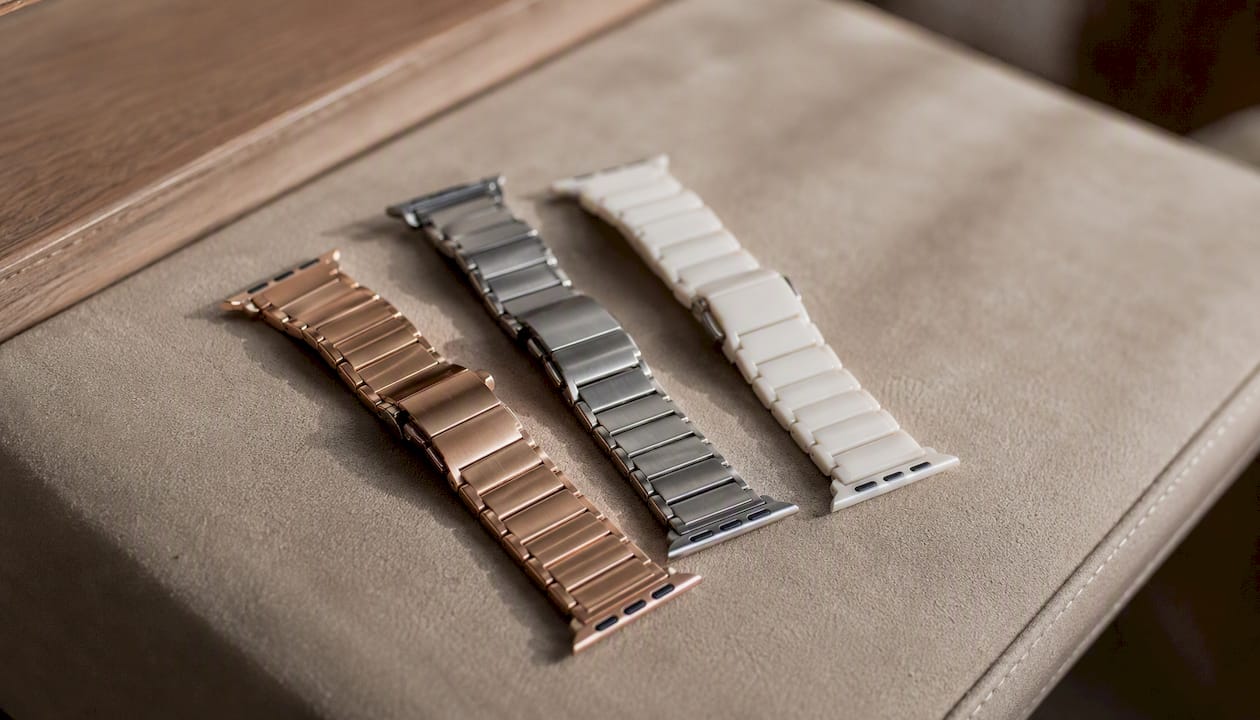
Which materials and finishes actually look like jewelry?
The finish you choose determines how the band reads on the wrist — and how long it stays looking new.
| Material | Finish Options | Scratch Resistance | Daily Wear Notes |
|---|---|---|---|
| 316L stainless steel | Polished, brushed | Good (polished hides minor marks) | Workhorse choice; re-polishable |
| PVD/DLC coated steel | Matte, colored, black | Very good | Color holds well; deep scratches expose base metal |
| Ceramic | High-gloss | Excellent surface hardness | Chips on hard impact; heavier feel |
| Plated/gilded finish | Gold, rose gold tones | Fair | Shows wear at edges over time |
316L stainless steel polishes to a long-lasting finish and accepts PVD and DLC coatings for color and added scratch resistance. That combination is why watchmakers use it as the standard for premium parts. A brushed finish hides light surface marks better than a mirror polish, though a polished band reads more like fine jewelry.
Ceramic offers a genuinely glass-smooth surface that resists everyday scratches, but it is brittle. Drop a ceramic band on tile and you may chip an end-link. PVD and DLC coatings extend the life of colored finishes, but any coating eventually shows wear at high-contact points like clasp edges. Plated finishes are the most affordable way to get a gold tone, with the tradeoff that the plating thins over months of daily abrasion.
How does clasp type change the jewelry look?
Clasp and finish are the two biggest visual signals that make a band read as jewelry rather than a generic accessory. The mechanics you choose matter as much as the metal.
- Butterfly clasp: Two folding wings open and close over a center bar. When shut, the clasp sits flush with the band links, creating a continuous bracelet profile with no visible buckle.
- Jewelry/deployant clasp: Opens with a push-button release and folds flat. Reads as a fine-watch detail and keeps the underside smooth against the wrist.
- Hidden/recessed clasp: The closure sits inside the band width so it is invisible from the top. Maximizes the jewelry illusion but can be harder to service.
- Magnetic Milanese closure: Allows micro-adjustment anywhere along the band length. Convenient, but the visible magnet reads less like jewelry. Check that the magnet strength does not interfere with cards or medical devices you carry.
Security matters too. A butterfly or deployant clasp locks with a positive click and stays closed during activity. Magnetic closures are secure for most daily use but can open under sustained lateral force.
Pro Tip: Three small details sell the jewelry look: flush end-links that sit tight against the watch lug, a finish that matches across band and clasp, and a centered clasp placement on the underside of the wrist. If any of those three are off, the band reads as a watch accessory, not a bracelet.
For more on how clasp types translate to men’s casual jewelry styling, the same principles of finish continuity and hidden hardware apply across bracelets and cuffs.
How do you size a jewelry-style band correctly?
Getting the size right before the band ships prevents the most common return reason for premium fixed-size bands.
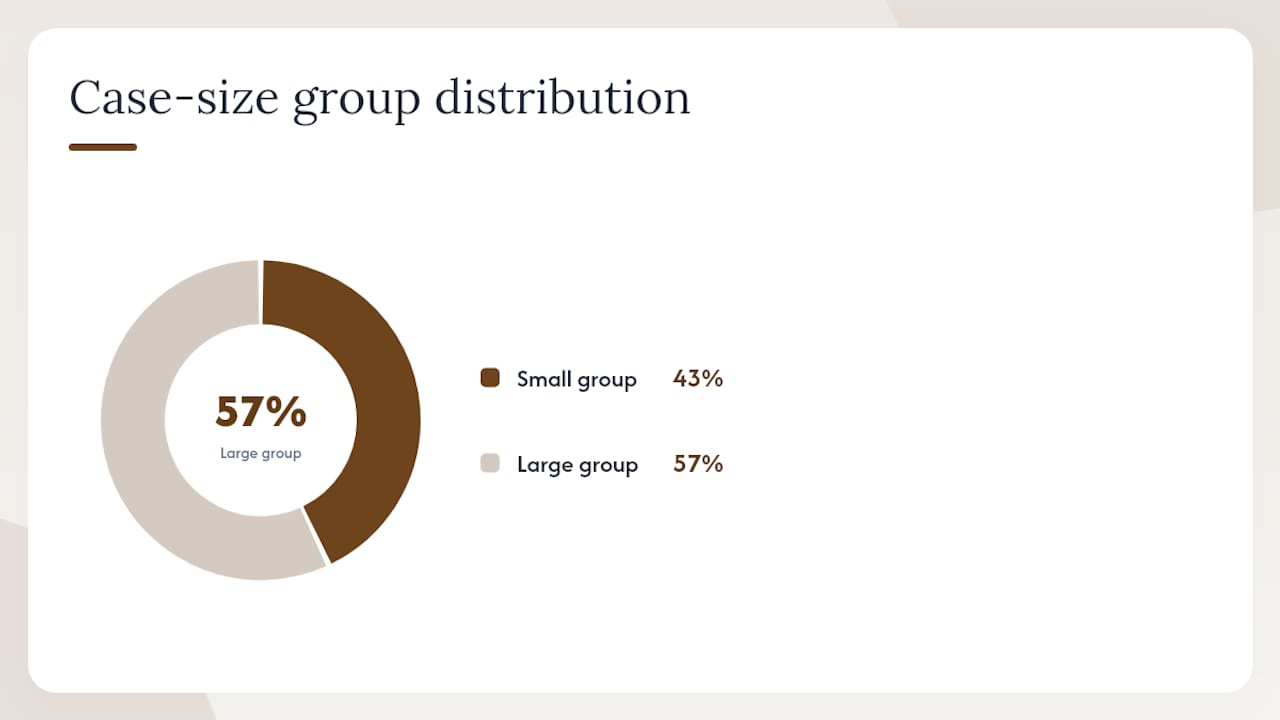
| Case-size group | Compatible case sizes | Band sizing approach |
|---|---|---|
| Small group | 38 mm, 40 mm, 41 mm | Measure wrist; use vendor sizing chart or tool |
| Large group | 42 mm, 44 mm, 45 mm, 49 mm | Measure wrist; use vendor sizing chart or tool |
Per Apple’s compatibility guidance, bands within each group fit all case sizes in that group. A band made for a 40 mm case fits a 38 mm and 41 mm case as well.
Steps to size accurately:
- Measure your wrist circumference in millimeters at the wearing position, during normal daytime hours (wrists swell slightly in heat and after exercise).
- For Solo Loop bands, sizing must be exact — use Apple’s printable sizing guide or the vendor’s physical sizing kit. A Solo Loop that does not have the correct exact size may spin or feel uncomfortable, affecting circulation.
- For link bracelets, start with the band at its longest setting and remove links one at a time until the clasp sits centered on the underside of the wrist with a finger’s width of movement.
- The Wizeband sizing tool handles both measurement and link removal, removing the need for a jeweler visit.
A practical sizing guide from MacObserver recommends choosing adjustable styles first if you are unsure — they tolerate more variance and reduce the risk of a return. Solo Loop sizes map to precise millimeter ranges, so an adjustable link bracelet is the safer starting point for first-time buyers.
How do you remove and install an Apple Watch band safely?
Place the watch face-down on a lint-free cloth before touching the band. This protects the display and gives you a stable surface.
- Locate the band release button on the back of the watch case, near the band slot.
- Press and hold the release button, then slide the band horizontally across the watch until it clears the slot. Never pull the band away from the case at an angle — slide it straight across.
- For the second band slot, repeat on the opposite side.
- To install a link bracelet, align the band’s lug connector with the slot, slide it in from the side until you feel and hear a click. Press down on the center lug latch to confirm flush seating — this step prevents scratching and ensures a secure lock, particularly on Ultra models where the lug channel is tighter.
- Test the fit: give the band a gentle tug. It should not slide out without pressing the release button.
If the band does not click into place: Do not force it. Slide the band back out, check that the lug connector is oriented correctly (the flat edge faces the watch back), then re-insert. A band that feels stiff on entry is usually rotated 180 degrees.
For a full walkthrough with model-specific tips, see Wizeband’s guide on how to change Apple Watch bands.
Keep sensors clear: Apple requires the watch to maintain skin contact for wrist-detection and heart-rate features. A band that is too loose breaks that contact and disables sensor readings.
How do you style a metal band to look like jewelry?
Match the band finish to the Apple Watch case color first. Silver-tone bands pair with silver and graphite cases; Rose Gold and warm Gold tones work with gold-case models. Mixing a cool silver band with a warm gold case creates a visual conflict that reads as mismatched rather than intentional.
Scale matters almost as much as finish. Narrower, lighter link styles suit 38/40/41 mm cases — a wide statement link on a small case looks heavy and unbalanced. Wider links and bolder chain styles read well on 44/45/49 mm cases, where the case face can anchor the visual weight.
For outfit context: subtle polished links work across business and casual settings. High-polish or ceramic bands carry an evening look. For statement-piece styling, treat the watch as the primary wrist piece and keep other bracelets minimal — one metal tone across all wrist jewelry reads as intentional coordination, not an accident.
Band weight affects how the watch sits. A heavier link bracelet tends to rotate the watch face toward the inside of the wrist. Counter this with a slightly snugger fit — not tight enough to restrict circulation, but firm enough that the watch face stays centered on top.
How do you keep a metal or ceramic band looking new?
Daily care is simple and takes under a minute.
- After each wear: wipe the band with a soft, dry cloth to remove sweat, oils, and lotion residue. These accelerate finish wear on plated surfaces.
- Weekly cleaning: use mild soap and lukewarm water on solid 316L steel bands. Rinse thoroughly and dry completely before storing or wearing. Avoid soaking any band that includes non-metal components.
- Plated and PVD finishes: skip abrasive cloths, toothpaste, and household cleaners. These strip the coating. A soft microfiber cloth is the only safe daily tool.
- Ceramic bands: clean the same way as steel, but handle with care — ceramic chips on hard surfaces.
- Clasp and pin inspection: once a week, snap the clasp open and closed and confirm it locks with a clean click. Check that quick-release pins sit flush and do not wobble.
- Storage: keep bands in a soft pouch or lined box when not on the wrist. Metal-on-metal contact in a drawer causes surface scratches.
Why premium metal bands are worth the investment
Paying for 316L construction and a proper clasp is not about status. It is about reducing friction in daily life. A well-made metal band does not stretch, discolor, or develop an odor the way silicone and leather bands do over time. The clasp either clicks or it does not — there is no ambiguity about whether the watch is secure.
The sizing step is where most buyers go wrong. A band that fits correctly stays on the top of the wrist, keeps sensors in contact, and does not rotate. That is a functional requirement, not a style preference. Wizeband’s sizing tool addresses this directly by giving buyers a physical reference before they commit to a size — a detail that matters more for fixed-size styles than for adjustable link bracelets.
Returns are commonly caused by poor sizing of premium fixed-size bands, so using a sizing tool helps reduce returns by improving fit accuracy.
Wizeband makes it easy to design your watch with jewelry-style bands
The clearest path from a stock Apple Watch to a wrist piece that reads as jewelry is a 316L stainless steel or ceramic band with a butterfly or jewelry clasp, sized correctly to your case group and wrist measurement. Wizeband builds exactly that.
Every Wizeband band uses 316L stainless steel with jewelry and butterfly clasps, quick-adjust link systems, and finishes in Silver Gold, Starlight, Rose Gold, and Gold. Bands are listed by the two Apple Watch case-size groups (38/40/41 mm and 42/44/45/49 mm), compatible with Series 4–10, SE, and Ultra 2. The Wizeband Starter Kit pairs a jewelry-style band with the sizing tool in one order — the practical starting point for first-time buyers. For a broader selection, the Wizeband Essentials Bundle covers multiple finishes. Returns and warranty details are listed on each product page. Browse the full lineup and use the sizing tool at Wizeband.
Sources
- Remove, change, and fasten Apple Watch bands
- All Apple Watch band sizes: How to find the perfect fit
- Apple Watch band size guide
- Why 316L Stainless Steel Dominates Watchmaking | Key Benefits
Recommended
Aus dem Blog
Alle anzeigen


Hinterlassen Sie einen Kommentar