


Metal Watch Band vs Rubber Band: Your 2026 Guide
The metal watch band vs rubber band decision comes down to one question: what does your day actually look like? Metal bands, typically crafted from 316L stainless steel or titanium, deliver a polished, jewelry-grade look that holds up across professional and casual settings. Rubber bands, including FKM rubber and silicone variants, prioritize lightweight comfort and moisture resistance for active wear. Both materials have earned their place on the Apple Watch, and the right choice depends on your lifestyle, not just your taste. Wizeband has built its entire lineup around this reality, offering premium metal options that look like jewelry and wear like everyday accessories.
What are the key differences between metal watch band vs rubber band?
Metal bands are the stronger all-day performer for users who move between office and social settings. Metal bracelets are recommended as the best all-rounder for users seeking one strap that covers office to casual wear. That versatility matters because most Apple Watch owners wear their watch across multiple contexts every day.
Rubber bands take the lead the moment heat, sweat, or water enters the picture. Rubber bands offer superior water and sweat resistance, making them the clear choice for hot climates and active lifestyles. A metal band worn during a long run or a beach day will trap moisture against the skin and feel uncomfortable within the hour.

The visual difference is also significant. Metal bands create a cohesive jewelry look integrated with the watch head, while rubber bands can visually separate the watch from the wrist. For Apple Watch users who want their device to read as an accessory rather than a fitness tracker, that distinction matters.
Neither material is objectively better. The right pick depends on how you use your watch, what you wear it with, and how much maintenance you want to do.
How do metal and rubber bands compare in durability and maintenance?
Metal bands are built to last years with proper care, but they are not scratch-proof. Stainless steel, particularly 316L grade, resists corrosion well and holds its finish under daily wear. The trade-off is surface scratches, which accumulate on polished links over time and become visible in direct light.
Metal bands require cleaning with a soft brush, while rubber bands need simple soap and water maintenance. Metal cleaning takes more effort but produces a thorough result. Rubber cleaning is faster but needs to happen more often to prevent material aging.
Rubber bands are tear-resistant and flexible, but UV exposure and heat accelerate their breakdown. A low-quality silicone band left in direct sunlight regularly will stiffen and crack within a year or two. Metal bands are easier to clean thoroughly with the right tools, while rubber requires simpler but more frequent cleaning to maintain its appearance.
Material quality makes a significant difference with rubber. High-quality FKM rubber is hypoallergenic, but low-quality silicone attracts dust and lint, requiring constant attention. Metal bands stay cleaner in dusty environments without extra effort.
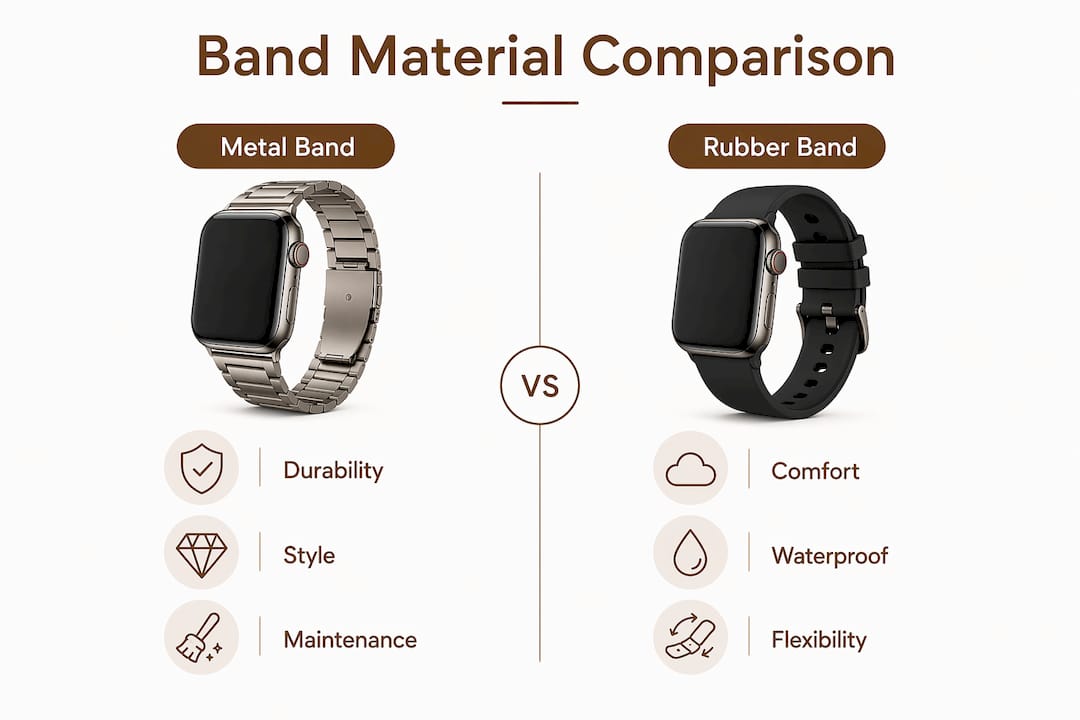
| Feature | Metal band | Rubber band |
|---|---|---|
| Durability | High, resists tearing | Moderate, ages under UV |
| Scratch resistance | Low to moderate | High |
| Maintenance | Soft brush, periodic deep clean | Soap and water, frequent |
| Water resistance | Moderate | High |
| Longevity | 5+ years with care | 1–3 years depending on quality |
Pro Tip: Use a soft toothbrush and warm water to clean between metal links every two weeks. For rubber bands, rinse after every sweaty workout to slow material aging.
How do metal and rubber bands compare in comfort, weight, and wearability?
Metal bands carry real weight, and that weight is part of their appeal. Wearing metal bands is psychologically associated with value and confidence, while rubber is appreciated for making the watch “disappear” on the wrist. These are two genuinely different experiences, and neither is wrong.
For active use, rubber wins on comfort. Switching to lightweight rubber bands can reduce wrist fatigue by over 40% during high-impact activities compared to heavy metal bracelets. That reduction is meaningful during a long run, a gym session, or a full day of physical work.
Metal bands can also create a heat-trapping effect in warm weather. The links conduct temperature, which means a metal band worn in summer sun will warm up against the skin. Rubber stays closer to ambient temperature and breathes better during sustained activity.
The hypoallergenic factor also splits along quality lines. High-grade FKM rubber and 316L stainless steel are both skin-safe for most people. Lower-grade alloys and cheap silicone are where reactions occur. If you have sensitive skin, material grade matters more than material type.
- Metal bands: heavier, confidence-boosting, best for cooler or indoor environments
- Rubber bands: lighter, ergonomic, best for heat, sweat, and extended physical activity
- FKM rubber: hypoallergenic and dust-resistant, the premium rubber choice
- 316L stainless steel: corrosion-resistant and skin-safe, the standard for quality metal bands
Pro Tip: Quick-release band systems let you swap between metal and rubber in seconds. Own both and switch based on your activity, not just your outfit.
Which band style suits your lifestyle and fashion preferences?
Metal bands belong in professional settings. A stainless steel link band or a polished metal strap reads as intentional and put-together in office environments, client meetings, and formal events. The Tokyo Metal Strap from Wizeband is a strong example of this: a stainless steel band designed to move from desk to dinner without looking out of place.
Rubber bands belong on the trail, in the gym, and at the beach. Their flexibility, grip, and moisture resistance make them the practical choice for anyone whose day includes physical activity. Rubber bands are ideal for water, heat, and active uses due to easy maintenance and fast drying. A rubber band after a swim is dry in minutes. A metal band holds moisture in its links for much longer.
The style gap between the two materials is closing. Luxury watch brands increasingly use high-end rubber, signaling its rise from “cheap alternative” to a preferred choice for active professionals. A premium FKM rubber band in a clean colorway now reads as intentional style, not a compromise.
Matching your band to your wardrobe is straightforward when you think in categories:
- Formal and professional: Metal link bands, polished stainless steel straps, or ceramic bands
- Smart casual: Metal straps with a matte finish, or premium rubber in neutral tones
- Active and outdoor: Rubber or silicone bands in bold or functional colors
- Mixed-use days: A quick-release metal band for the morning, swapped to rubber for the afternoon workout
The Wizeband fashion guide covers how to match band styles to specific outfits and occasions if you want more detailed pairing advice.
How to choose the right band and maintain it for longevity
The selection process starts with material grade. For metal, 316L stainless steel is the standard worth paying for. It resists corrosion, holds its finish, and is safe for sensitive skin. For rubber, FKM is the upgrade over basic silicone. It repels dust, stays flexible longer, and is hypoallergenic.
Fit is the second factor. A band that is too loose will shift during activity and cause skin irritation. A band that is too tight restricts circulation and leaves marks. Wizeband’s band sizing tool takes the guesswork out of getting the right fit for metal link bands, which require link removal to size correctly.
Modern quick-release technology simplifies swapping bands, encouraging users to maintain multiple materials for varied needs. Owning one metal band and one rubber band covers nearly every situation an Apple Watch user encounters. The cost of two quality bands is far lower than replacing one poor-quality band repeatedly.
| Criteria | Metal band | Rubber band |
|---|---|---|
| Material grade | 316L stainless steel | FKM rubber preferred over silicone |
| Fit method | Link removal for custom sizing | Buckle or pin adjustment |
| Cleaning routine | Soft brush, warm water, dry thoroughly | Soap and water, rinse after sweat |
| Best use case | Office, formal, smart casual | Active, outdoor, water exposure |
| Replacement frequency | Every 5+ years | Every 1–3 years |
Pro Tip: Store rubber bands away from direct sunlight when not in use. UV exposure is the primary cause of premature cracking and stiffness in silicone and rubber materials.
Key takeaways
Metal bands suit professional and style-forward use, while rubber bands lead in comfort and durability for active, moisture-heavy environments.
| Point | Details |
|---|---|
| Metal band strengths | Best for office, formal, and smart casual wear with a polished, jewelry-grade look. |
| Rubber band strengths | Superior for active use, water exposure, and hot climates due to lightweight comfort. |
| Durability difference | Metal lasts 5+ years with care; rubber lasts 1–3 years depending on UV exposure and quality. |
| Material grade matters | Choose 316L stainless steel for metal and FKM rubber over basic silicone for best results. |
| Own both band types | Quick-release systems make switching fast, so one metal and one rubber band covers every situation. |
What I’ve learned from years of watching people choose the wrong band
Most people buy one band and stick with it regardless of context. That is the actual mistake. A metal band worn through a sweaty gym session will trap moisture and irritate the skin. A rubber band worn to a job interview will undercut an otherwise polished appearance. The band is not a minor detail. It changes how the watch reads and how it feels.
The trend I find most interesting is rubber’s reputation shift. Premium FKM rubber bands now appear on watches that cost thousands of dollars. That tells you the material itself is not the problem. Cheap silicone is the problem. When you invest in quality rubber, you get a band that is ergonomic, hypoallergenic, and genuinely comfortable for all-day wear.
My practical recommendation is simple: buy one quality metal band for work and social settings, and one quality rubber or silicone band for everything active. Quick-release systems make the switch take about five seconds. The total cost is less than most people spend on a single premium band, and the result is a watch that works for every part of your day.
The psychological dimension is real too. A metal band signals intention. It says the watch is an accessory, not just a device. Rubber signals practicality and focus. Neither signal is wrong. The question is which one fits the moment you are in.
— John
Wizeband’s metal and silicone bands for every part of your day
Wizeband designs Apple Watch bands that cover both ends of this comparison without compromise. The metal lineup includes stainless steel options built from 316L steel with butterfly clasps and quick-adjust systems, so sizing is simple and the fit stays secure. The Tokyo Metal Strap and the Echo Stainless Band are two strong starting points for professional and everyday wear.
For active days, the Mare Silicone Band delivers the lightweight, moisture-resistant comfort rubber bands are known for, with a cleaner finish than most silicone options on the market. Every Wizeband band is compatible with Apple Watch Series 4–10, SE, and Ultra 2. Two size groups cover the full range, so checkout is straightforward. Browse the full lineup at Wizeband and pick the combination that fits your day.
FAQ
Which lasts longer, a metal or rubber watch band?
Metal bands typically last five or more years with proper care, while rubber bands last one to three years depending on UV exposure and material quality. FKM rubber outlasts basic silicone by a significant margin.
Is a metal watch band better for everyday wear?
Metal bands are the better choice for professional and mixed-use daily wear. They handle office, casual, and social settings equally well and stay cleaner in dusty environments than rubber.
Can I wear a rubber watch band to work?
A premium rubber band in a neutral color works in casual or smart casual office environments. For formal or client-facing settings, a metal band reads as more polished and intentional.
Are metal watch bands safe for sensitive skin?
316L stainless steel is hypoallergenic and safe for most skin types. Lower-grade alloys can cause reactions, so material grade is the key factor, not the metal category itself.
Do I need to choose between metal and rubber bands?
No. Quick-release systems let you own both and switch in seconds. One metal band for work and one rubber band for active use covers nearly every situation an Apple Watch user encounters.
Recommended
Aus dem Blog
Alle anzeigen


Hinterlassen Sie einen Kommentar