


Apple Watch Metal Band Water Exposure Guide
Apple Watch metal bands are not water-resistant, and any exposure to moisture requires immediate care to prevent tarnishing, corrosion, and skin irritation. This apple watch metal band water exposure guide covers everything you need to protect your stainless steel or link bracelet from water damage. Whether you caught a splash at the sink, sweated through a workout, or forgot to swap bands before a swim, the steps you take in the next few minutes determine how long your band stays looking sharp. Proper metal band care is not complicated, but it is specific.
What makes Apple Watch metal bands vulnerable to water damage?
Metal bands are not water-resistant, even when the Apple Watch device itself is. Apple and industry experts classify stainless steel bands, Milanese Loop styles, and link bracelets as unsuitable for swimming or water-intensive activity. That distinction matters more than most owners realize.
The core problem is chemistry. Saltwater and chlorine both accelerate corrosion on metal finishes. Salt draws moisture into microscopic gaps between links and connectors. Chlorine attacks the surface layer of the metal, dulling the finish and weakening the structure over time. A single pool session without rinsing can start a corrosion process that takes weeks to become visible.
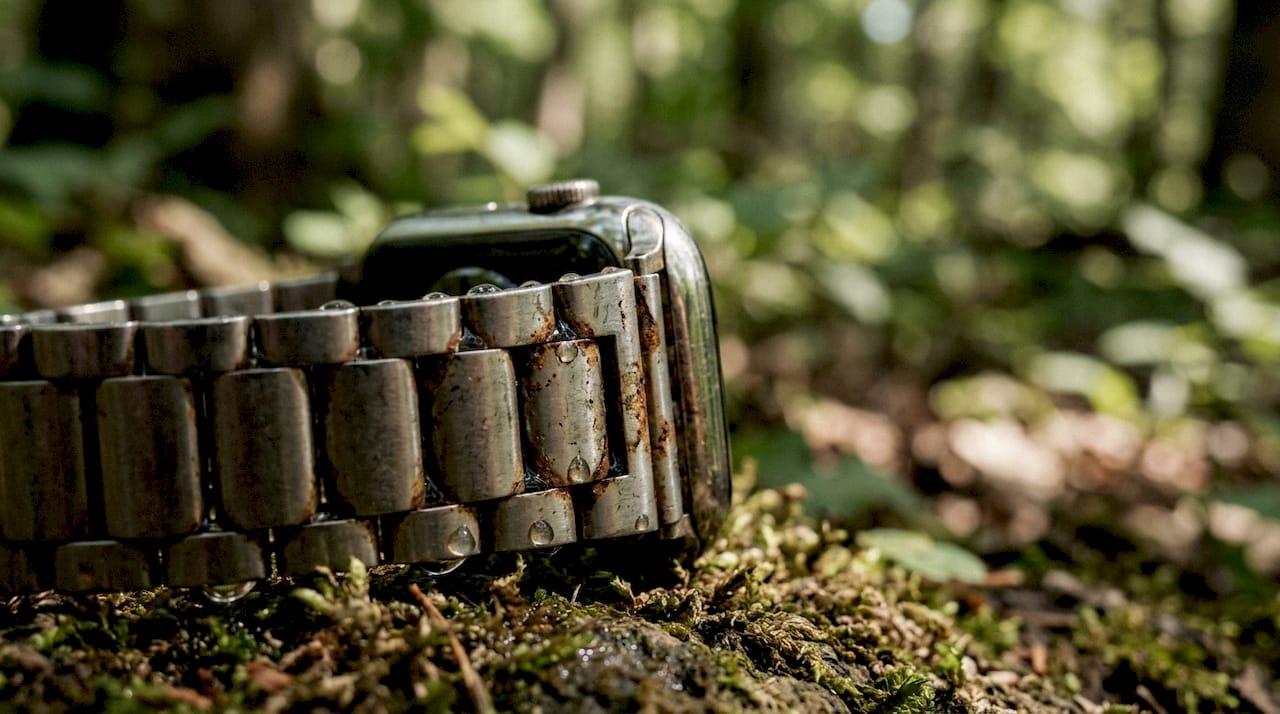
The band’s physical design makes things worse. Metal links and butterfly clasps create tight spaces where water collects and stays. Moisture trapped under connectors triggers electrochemical reactions between the band material and the watch casing. Those reactions cause pitting, discoloration, and in some cases hardware damage at the attachment point.
Sweat adds a third layer of risk. Metal bands conduct heat and limit airflow against the skin. Limited airflow under metal bands creates a humid microenvironment that keeps the band damp long after exercise ends. That trapped moisture is a leading cause of skin irritation, and it is often mistaken for a metal allergy when the real fix is simply drying the band more thoroughly.
Key risks at a glance:
- Saltwater and chlorine accelerate surface corrosion and finish degradation
- Trapped moisture between links causes electrochemical reactions
- Sweat and heat create prolonged dampness that irritates skin
- Connectors and clasps are the highest-risk zones for moisture buildup
Pro Tip: Swap to a water-resistant band before swimming or intense workouts. Keep your metal band for dry-wear occasions to extend its life significantly.
What supplies do you need to clean a metal Apple Watch band?
The right tools make the cleaning process faster and safer for the band’s finish. Using the wrong materials, including rough cloths or strong detergents, causes more damage than the water itself.
| Supply | Purpose |
|---|---|
| Mild, hypoallergenic soap | Removes residue without stripping the metal finish |
| Soft microfiber cloth | Dries and polishes without scratching |
| Soft-bristle toothbrush | Reaches between links and around clasps |
| Fresh running water | Rinses away salt, chlorine, and soap residue |
| Dry, well-ventilated area | Allows complete air drying before reassembly |
Mild, hypoallergenic soap is the only cleaning agent you should use on a metal band. Dish soap, antibacterial hand soap, and household cleaners all contain chemicals that degrade metal finishes over time. A small drop of gentle soap in a bowl of lukewarm water is enough for most cleaning sessions.
The soft-bristle toothbrush is the most underrated tool on this list. Link bracelets have dozens of small gaps that a cloth cannot reach. A toothbrush lets you work soap and water into those spaces without applying enough pressure to scratch the surface. Use it in short, light strokes along the length of the band rather than scrubbing across the links.
How to clean and dry your metal band after water exposure
Follow these steps immediately after any significant water contact, especially after salt or chlorinated water.
-
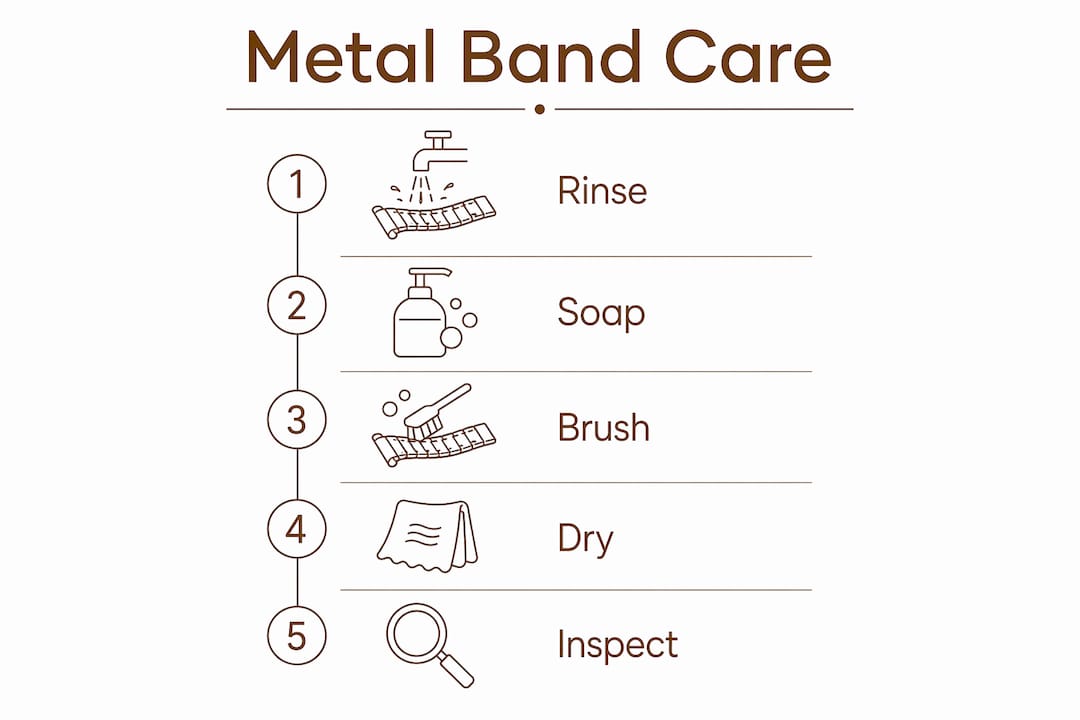
Remove the band from your watch. Detach the band before cleaning. Water and soap near the watch’s connectors and sensors can cause problems even on water-resistant models.
-
Rinse under fresh running water. Hold the band under cool, fresh water for 30–60 seconds. Rinsing immediately after salt or chlorine exposure stops the corrosion process before it starts. Move the links as you rinse to flush out trapped water.
-
Apply mild soap if needed. Add a small amount of hypoallergenic soap to a soft toothbrush. Work it gently between the links and around the clasp. Focus on the connector ends where moisture accumulates most.
-
Rinse again thoroughly. Soap residue left between links causes its own irritation and can dull the finish. Rinse until the water runs completely clear.
-
Pat dry with a microfiber cloth. Press the cloth firmly against the band rather than rubbing. Rubbing drags any remaining particles across the surface and creates fine scratches over time.
-
Air dry completely before reattaching. Lay the band flat on a dry cloth in a well-ventilated area. Give it at least 30 minutes. Reattaching a damp band traps moisture directly against the watch casing.
-
Enable Water Lock on your Apple Watch before swimming. Water Lock mode prevents accidental screen inputs during water activity and uses sound vibrations to expel water from the speaker after you finish. It protects the device, though it does not protect the band.
Pro Tip: After air drying, run a dry microfiber cloth one more time along the full length of the band. This picks up any remaining moisture from between the links that air drying alone may miss.
Common mistakes that damage metal bands after water exposure
Most metal band damage is preventable. The mistakes below account for the majority of premature tarnishing, corrosion, and skin irritation cases.
Skin irritation from metal bands is most often caused by trapped moisture and residue, not a metal allergy. Thorough drying after every water or sweat exposure resolves the issue in most cases without requiring a band change.
-
Leaving the band wet. Skipping the drying step is the single most damaging habit. Even a few hours of dampness in the connector area can start a corrosion cycle.
-
Using harsh soaps or scrubbing hard. Strong detergents strip protective coatings. Abrasive scrubbing leaves micro-scratches that trap future moisture and accelerate tarnishing.
-
Assuming the watch’s water resistance covers the band. Apple Watch models are water-resistant up to 50m or 100m depending on the series, but that rating applies only to the device. The band has no equivalent rating. Owners who swim regularly with metal bands often discover finish damage within weeks.
-
Not cleaning after sweat. Regular cleaning prevents bacterial buildup that causes odors and skin irritation. A band does not need to look dirty to carry enough residue to cause problems.
-
Ignoring early tarnish signs. A dull or slightly discolored patch on the band is an early warning. Cleaning it promptly with mild soap and a soft brush stops the process. Waiting allows the tarnish to spread and deepen.
For guidance on managing metal band skin irritation, including when to consider switching materials, Wizeband’s resource on sensitive skin band options covers the full picture.
How to extend your metal band’s life with regular care
Reactive cleaning after water exposure is necessary, but preventive maintenance keeps your band looking new between incidents.
-
Clean weekly, not just after water contact. Sweat, sunscreen, and hand lotion all accumulate on metal bands during normal wear. A weekly wipe-down with a damp microfiber cloth removes these before they bond to the surface.
-
Avoid prolonged water exposure whenever possible. Washing dishes, showering, and swimming all qualify as prolonged exposure. Removing the band takes 10 seconds and prevents hours of potential damage.
-
Rotate to a water-resistant band for workouts and swimming. Silicone and fluoroelastomer bands handle moisture without any special care. Keeping a secondary band for active use protects your metal band for the occasions where it looks best. See Wizeband’s breakdown of bands that withstand water for a full comparison by material.
-
Store bands in a dry location. A bathroom drawer near a shower collects ambient humidity. Store your metal band in a bedroom drawer or a small pouch when not in use.
-
Check connectors monthly. Run your fingernail along the connector ends. Any roughness, discoloration, or buildup signals that moisture has been sitting there. Clean and dry the area immediately.
-
Seek professional servicing for mechanical issues. If a clasp sticks, links feel stiff, or corrosion has reached the internal mechanism, a jeweler or watch technician can often restore the band at a fraction of the replacement cost.
For a full breakdown of washing metal and other band types, Wizeband’s complete washing guide covers every material in detail.
Key takeaways
Metal bands require immediate rinsing, gentle soap cleaning, and complete air drying after every water or sweat exposure to prevent corrosion, tarnishing, and skin irritation.
| Point | Details |
|---|---|
| Metal bands are not water-resistant | Apple classifies stainless steel and link bands as unsuitable for swimming or water-intensive activity. |
| Rinse immediately after exposure | Fresh water rinsing within minutes of salt or chlorine contact stops corrosion before it starts. |
| Dry connectors completely | Trapped moisture at connector points causes electrochemical reactions and skin irritation. |
| Use only mild, hypoallergenic soap | Harsh cleaners strip the metal finish and accelerate long-term wear. |
| Rotate bands for active use | Keeping a water-resistant band for workouts protects your metal band’s appearance and structure. |
What I’ve learned from wearing metal bands through real life
Metal bands are the most visually impressive Apple Watch accessory you can own. They also require the most discipline to maintain. I’ve seen owners ruin a beautiful stainless steel band in a single summer simply by wearing it to the pool a few times without rinsing afterward. The tarnish that results is not always reversible.
The trade-off I’ve settled on personally is straightforward. Metal bands are for days when appearance matters: meetings, dinners, events. For workouts, beach days, or anything involving prolonged water contact, a silicone or sport band does the job without any maintenance burden. That rotation strategy extends the life of a metal band dramatically and keeps it looking as good as the day you bought it.
The skin irritation angle is one most owners overlook until it becomes a problem. Trapped sweat under metal links is uncomfortable and, over time, can cause contact dermatitis that gets misdiagnosed as a nickel allergy. The fix is almost always better drying habits, not a new band. Spend 60 seconds drying your band after a sweaty commute or a gym session, and you will likely never deal with that issue.
My honest recommendation: treat your metal Apple Watch band the way you would treat a fine piece of jewelry. You would not wear a gold bracelet into a chlorinated pool. The same logic applies here.
— John
Wizeband metal bands built for lasting style
If you want a metal Apple Watch band that holds up to real daily wear, Wizeband’s lineup is worth a close look.

Wizeband has designed premium metal bands since 2016, using 316L stainless steel with butterfly clasps and quick-adjust link systems built for a secure, comfortable fit. Every band works across Apple Watch Series 4–10, SE, and Ultra 2. The Gaia Metal Strap is a strong starting point for owners who want a classic link style that cleans up easily after daily wear. For those who want to build a rotation with multiple finishes, the Wizeband Essentials Bundle offers a practical way to get started without buying individual bands one at a time. Finishes include Silver Gold, Rose Gold, Starlight, and Gold across the full collection.
FAQ
Are Apple Watch metal bands waterproof?
No. Apple classifies metal bands, including stainless steel and link bracelets, as non-water-resistant. They are not suitable for swimming or water-intensive activity.
What happens if my metal Apple Watch band gets wet?
Rinse it immediately with fresh water, clean gently with mild soap if needed, and air dry completely before reattaching. Saltwater and chlorine accelerate corrosion if left on the band.
Can I shower with my Apple Watch metal band on?
Showering with a metal band is not recommended. Soap, shampoo, and prolonged water exposure degrade the finish and trap moisture in the links and connectors.
Why does my metal Apple Watch band irritate my skin?
Skin irritation is most often caused by trapped moisture and sweat under the band, not a metal allergy. Thorough drying after every wear session resolves the issue in most cases.
How often should I clean my metal Apple Watch band?
Clean your band at least once a week, even without visible dirt. Regular cleaning removes sweat, lotion, and residue that cause odors and skin irritation over time.
Recommended
Aus dem Blog
Alle anzeigen


Hinterlassen Sie einen Kommentar