


Quick-Adjust Watch Bands: What They Are and How They Work
What is a quick-adjust watch band?
A quick-adjust watch band is a strap with a built-in mechanism that lets you resize the fit without any tools. You press a lever, slide a clasp, or push a button, and the band gets tighter or looser in seconds. No pins, no screwdrivers, no jeweler required.
The industry term for this feature is micro-adjustment, and it lives inside the clasp. Most quick-adjust bands use one of two approaches: a sliding lever that moves the clasp along a short track, or a series of notched holes on the clasp body that work like belt buckle positions. Either way, the goal is the same: small, precise changes to band length without removing any links.
Here is what sets quick-adjust bands apart from standard watch bands:
- No tools needed for everyday fit changes
- Incremental sizing through clasp positions, not full link removal
- Faster adjustments when your wrist size shifts during the day
- Lower risk of scratching the watch case or band hardware
- Compatible with metal, stainless steel, and some hybrid band styles
- Reusable and repeatable adjustments without wear to the band
Traditional metal bracelets require a pin punch or a dedicated link removal tool to change the fit. A quick-adjust clasp skips that process entirely for minor sizing. For larger changes, like adding or removing full links, you still need a tool. The micro-adjust handles everything in between.
How quick-adjust and tool-less micro-adjust clasps work
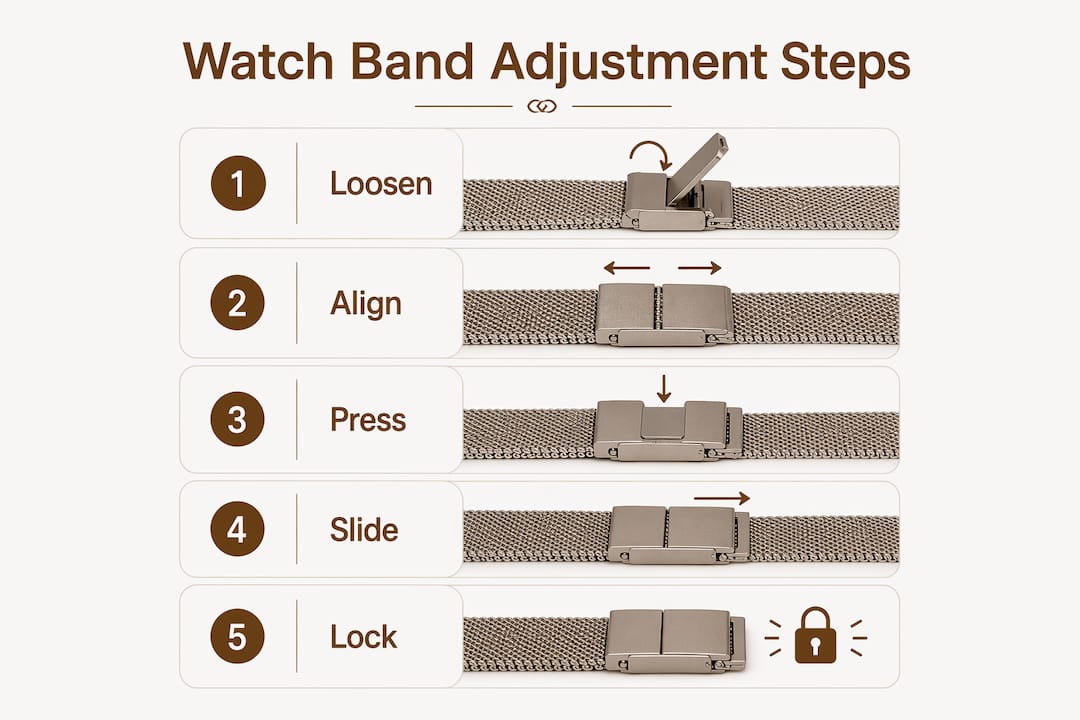
The mechanism is straightforward. Inside the clasp body, there are one to four small holes or notched positions along the side. A spring-loaded pin sits inside the clasp and locks into whichever hole is selected. To move to a different position, you press the pin inward, slide the clasp to the next notch, and release. The pin locks in with a click.
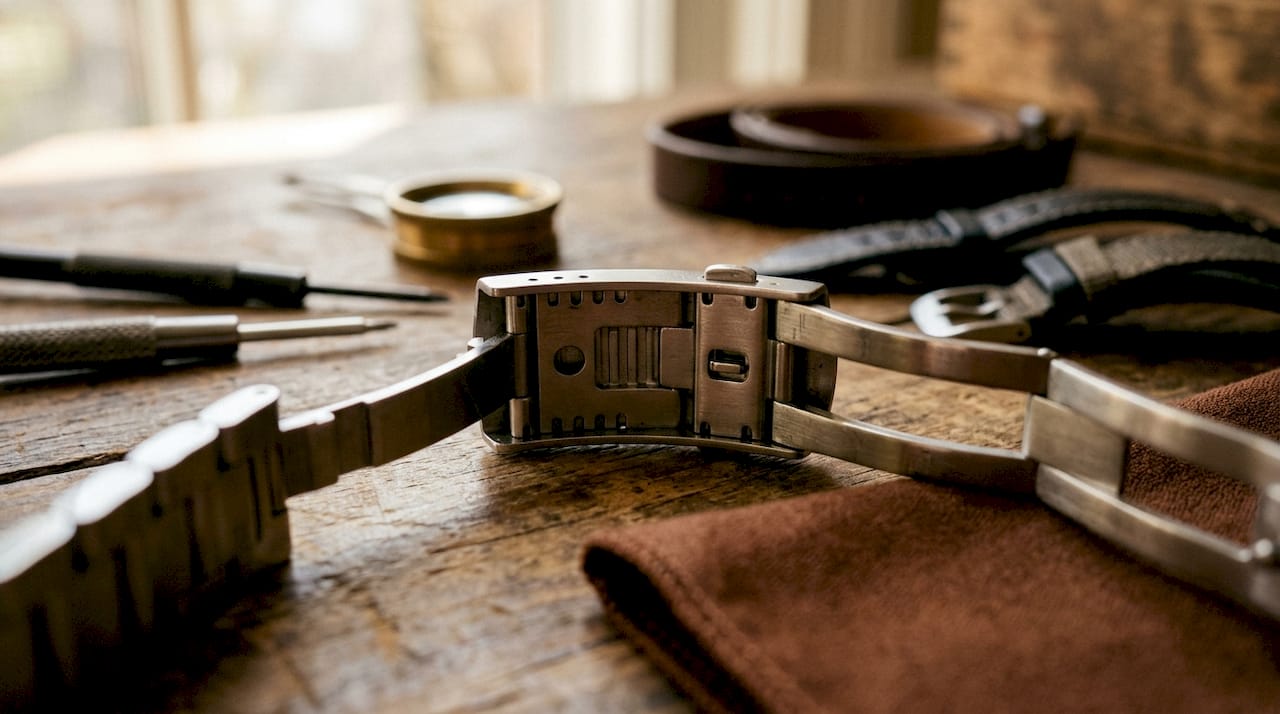
Quick-adjust mechanisms allow fast, tool-less fit refinement through these clasp increments, giving you roughly a half-link’s worth of adjustment per position. That range is enough to handle the natural swelling and shrinking your wrist goes through across a full day.
The table below shows how the core components work together:
| Component | Function | Tool required? |
|---|---|---|
| Clasp body | Houses the adjustment track or hole positions | No |
| Spring-loaded pin | Locks into selected hole to hold the fit | No |
| Lever or push-button | Releases the pin so you can move to a new position | No |
| Adjustment holes (1–4) | Set the incremental length positions | No |
| Link chain | Sets the base length; requires a tool to change | Yes |
A few practical points about daily use:
- The clasp adjustment works best when the band is already close to your correct size via link sizing
- Moving one position typically changes the fit by a few millimeters
- You should hear or feel a click when the pin seats correctly in a new hole
- Forcing the clasp past its range can damage the spring pin
Pro Tip: Start at the loosest clasp position and work inward one notch at a time. A proper watch fit allows slight wrist movement without the watch sliding up the arm.
What types of micro-adjustment systems are used in watch bands?
Micro-adjust systems vary widely across band styles and price points. Each design trades off ease of use, bulk, and how fine the adjustments can get.
| Adjustment type | How it works | Pros | Cons | Typical material |
|---|---|---|---|---|
| Notched hole clasp | Pin locks into 1–4 holes on clasp side | Simple, low profile | Limited positions | Stainless steel |
| Ratchet track clasp | Sliding ratchet with many fine positions | Very precise fit | Bulkier, heavier | Stainless steel |
| Multi-hole strap | Extra holes punched into leather or silicone | Flexible, low cost | Requires buckle change | Leather, silicone |
| Push-button micro-adjust | Button releases clasp to slide freely | Fast, one-handed | Less precise | Stainless steel |
| Expandable/stretch band | Coiled links flex over the hand | No adjustment needed | Fit is approximate | Metal alloy |
Ratcheting clasps offer the most positions but add bulk to the clasp body. Advanced ratchet clasps require more internal space, which adds weight and can affect the look of a dress or luxury band. For everyday wear, the notched hole system is the most common because it stays thin and clean.
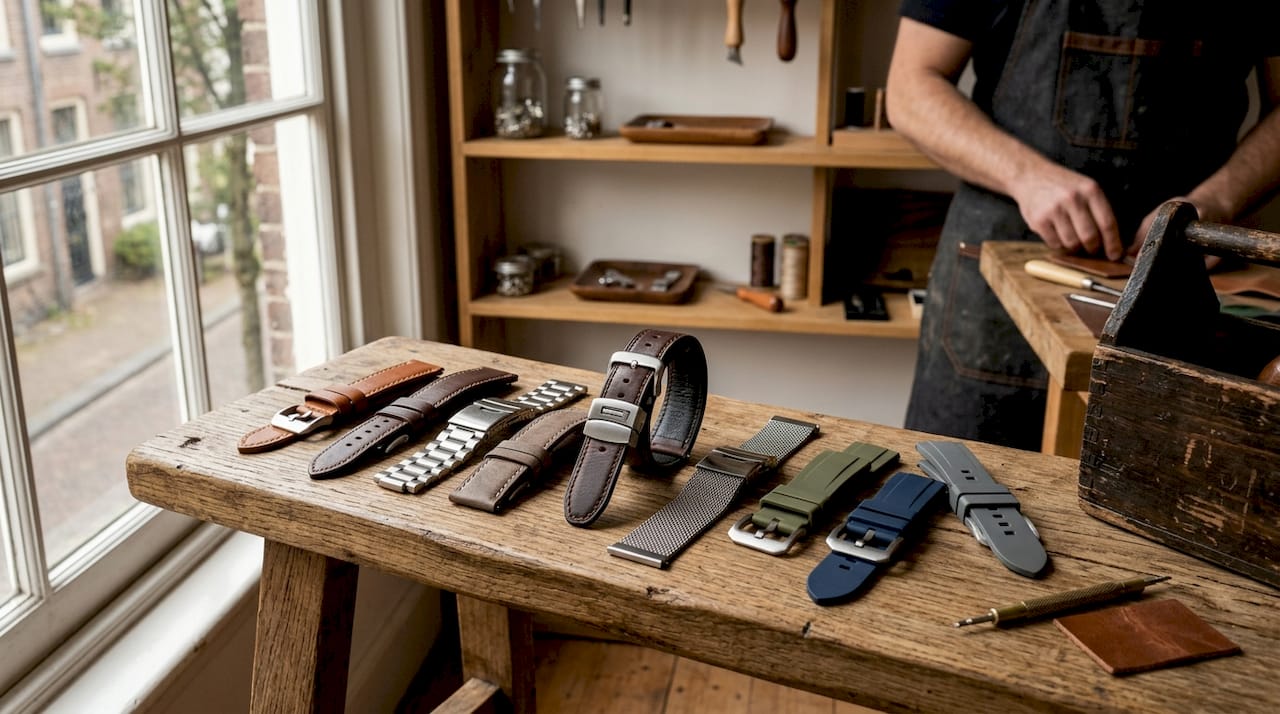
Multi-hole straps on leather or silicone bands work differently. The holes are spaced along the strap itself, and you simply move the buckle pin to a new hole. This is the oldest form of adjustable watch band and still works well for non-metal styles.
Quick-release and quick-adjust are not the same system. Quick-release handles strap removal from the watch case. Quick-adjust handles fit length at the clasp. A band can have one, both, or neither.
How to adjust your watch band for the right fit
Getting the fit right takes two steps: base sizing with links, then fine-tuning with the clasp.
- Measure your wrist. Use a soft tape measure or a strip of paper around your wrist, just below the wrist bone. Note the measurement in millimeters.
- Set the clasp to its largest position. Open all clasp holes to the loosest setting before you start.
- Put the band on and close the clasp. Check whether the watch slides more than about an inch up your arm. If it does, you need to remove links first.
- Remove links if needed. Use a band link removal tool to push out the pins connecting individual links. Remove one link at a time, then recheck the fit.
- Use the micro-adjust for fine-tuning. Once the base size is close, press the clasp pin inward and move one notch tighter. Recheck. Repeat until the fit feels right.
- Confirm the fit. The watch should sit snug enough to stay in place but loose enough to slide a finger underneath without force.
- Check both sides of the clasp. Many clasps have adjustment holes on both sides. Move each side equally to keep the clasp centered on your wrist.
Pro Tip: Adjust your band in the evening, when your wrist is at its largest from daily activity. A fit that works then will stay comfortable all day without feeling tight in the morning.
Avoid forcing the clasp pin past the last hole. Proper use of micro-adjust clasps prevents clasp damage and keeps the fit consistent over time. If the band still feels too loose at the tightest clasp position, remove one more link before relying on the micro-adjust.
To avoid scratching the case or band during link removal, place a soft cloth under the watch and work slowly. The risk of lug scratches is one of the most common forms of self-inflicted watch damage, and it is entirely avoidable with the right setup.
Quick-adjust vs. quick-release vs. micro-adjust: what each term actually means
These three terms get mixed up constantly, and the confusion leads people to buy the wrong thing. Here is the clear breakdown:
- Quick-adjust (micro-adjust): Changes the length of the band at the clasp for a better fit. No strap removal involved.
- Quick-release: Changes the strap itself by detaching it from the watch case. Does not affect band length.
- Micro-adjust: The same as quick-adjust. Both terms describe incremental clasp-based fit changes.
The distinction matters because the goal determines which system you need. If you want to swap a metal band for a leather one, you need quick-release. If you want the same band to fit better, you need micro-adjust.
Quick-release spring bars use a small lever built into the bar itself. Pushing the lever retracts one pin so the strap slides off the lug without any tool. The total swap time is about 20–30 seconds, compared to 20–30 seconds with a quick-release system and about five minutes with a standard spring bar tool. A key benefit: quick-release design removes the risk of lug scratches entirely, since no hard metal tool ever contacts the case.
A band with both systems gives you the most flexibility. You can swap the strap in seconds and fine-tune the fit without tools once it is on. Wizeband’s adjustable metal bracelets for Apple Watch combine butterfly clasps with built-in micro-adjust positions, so you get both functions in one band.
The practical benefits of tool-less adjustment systems, whether quick-release or micro-adjust, include:
- Faster strap changes with no tools to find or buy
- No scratch risk to watch lugs or case surfaces
- Better daily comfort as wrist size shifts with temperature and activity
- Longer band life from less mechanical stress during adjustments
- Style flexibility without needing a watchmaker for every change
For anyone who wears their Apple Watch daily, a band with a micro-adjust clasp removes the most common friction point: the fit that is almost right but not quite. Wizeband’s 316L stainless steel bands, available across Apple Watch Series 4–10, SE, and Ultra 2, include this adjustment system as a standard feature. The Wizeband Essentials Bundle is a practical starting point if you want to try multiple styles with the same tool-free fit system.

Key Takeaways
A quick-adjust watch band uses a built-in clasp mechanism to resize fit without tools, while a quick-release system handles strap removal from the watch case entirely.
| Point | Details |
|---|---|
| Quick-adjust vs. quick-release | Quick-adjust changes band length at the clasp; quick-release detaches the strap from the case. |
| Micro-adjust range | Clasp positions cover incremental fit changes, not full link sizing. |
| Base sizing still required | Remove or add links first, then use the micro-adjust for fine-tuning. |
| Swap time with quick-release | Quick-release spring bars reduce strap swap time to about 20–30 seconds. |
| Scratch risk | Quick-release and tool-less clasps eliminate the lug scratch risk that comes with standard spring bar tools. |
Recommended
From the blog
View all


Leave a comment