


Smartwatch Bracelet Styling Explained for 2026
Smartwatch bracelet styling is the practice of selecting and coordinating bands and complementary bracelets to transform a smartwatch into a cohesive fashion accessory. The band you choose communicates formality, personality, and attention to detail before you say a word. Energy mismatch between strap and outfit is the most common styling failure, and it is entirely avoidable. This guide covers smartwatch bracelet styling explained from material selection to stacking ratios, metal continuity, and band care, giving you a practical framework for every occasion.
What materials and band types best suit different occasions?
The band is the frame of your smartwatch screen, and the wrong material breaks the entire look. Silicone bands suit gym and casual wear only. Wearing one to a business meeting or a dinner sends a clear signal that the watch is a fitness tracker, not a considered accessory.
Slim leather and stainless steel bands change that equation completely. Replacing a silicone strap with slim leather or stainless steel elevates the smartwatch to a professional accessory. That single swap costs nothing beyond the band itself, yet it shifts how people read your entire outfit.
Case size matters too. A 41mm or 42mm watch case pairs better with tailored clothing than larger sizes. Larger cases struggle to fit under formal shirt cuffs, which immediately signals a mismatch between the watch and the outfit’s formality level.
- Silicone bands: gym sessions, weekend errands, active outdoor wear
- Slim leather bands: business casual, office settings, dinner dates
- Stainless steel link bands: formal events, professional meetings, elevated everyday wear
- Nylon and stretchy bands: travel, casual Fridays, relaxed social settings
Pro Tip: Keep at least three bands in rotation: one silicone for workouts, one leather for the office, and one metal link for evenings. Switching takes under a minute and completely changes the watch’s personality.
The Wizeband fashion guide covers how different band materials read across retail and social settings, which is useful if you are building a strap rotation from scratch.
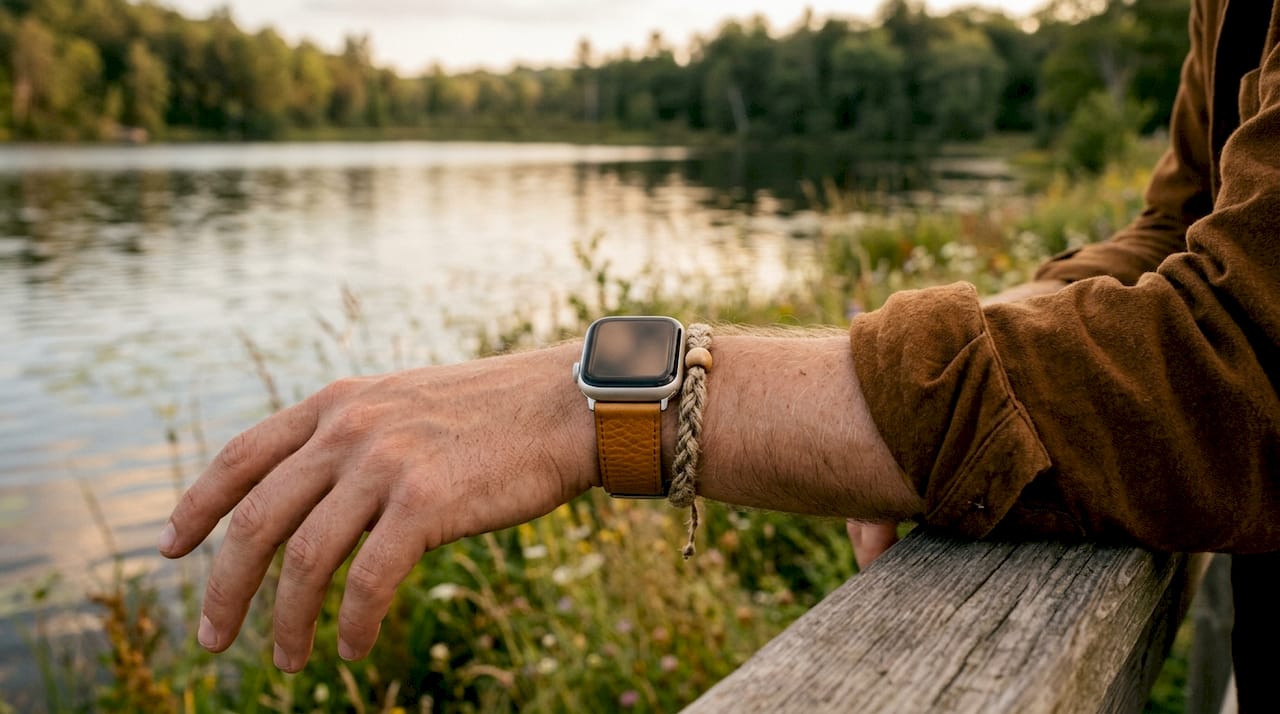
How to stack bracelets with a smartwatch without looking cluttered
Bracelet stacking with a smartwatch follows a clear set of rules. Break them and the wrist looks busy. Follow them and the result looks intentional and polished.
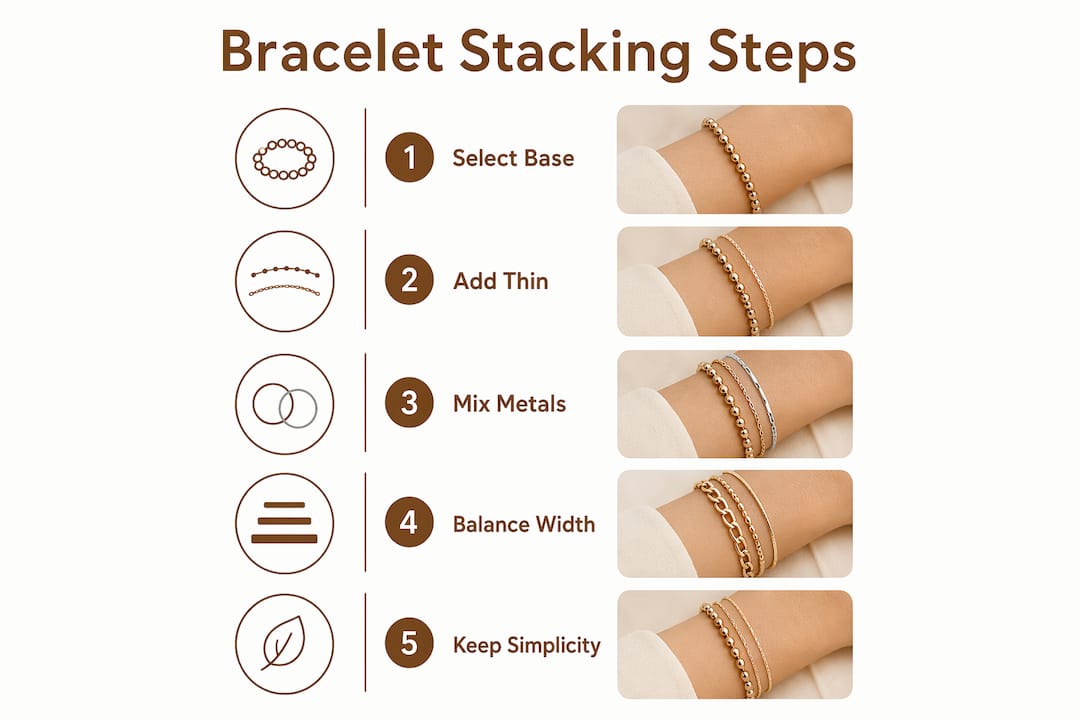
The recommended stacking ratio is 3 to 5 bracelets on the watch wrist. Fewer than three can look sparse. More than five creates visual noise that competes with the watch face itself.
Placement is the detail most people get wrong. Bracelets placed below the watch, toward the hand, create friction against the crown and screen. Thin bangles and chains belong above the watch, toward the elbow, with the watch acting as a natural backstop. This protects both the watch and the bracelets while creating a layered look that reads as deliberate.
- Start with the watch as your anchor. Choose your band first, then build the bracelet stack around its metal finish and weight.
- Match at least one bracelet to the watch case metal. A silver watch case pairs with silver chain bracelets. A gold case pairs with gold or warm-toned pieces.
- Mix textures, not finishes. Combine a smooth link bracelet with a beaded or woven piece in the same metal family. Mixing silver and gold finishes in the same stack reads as unplanned.
- Keep charms away from the watch crown. Dangling charms near the crown risk scratching the screen and catching on the digital crown during use.
- Use thin pieces above, heavier pieces below. A chunky cuff or wide bangle sits best between the watch and the hand, not above it.
Matching the watch case metal to at least one jewelry piece creates visual harmony. That single point of continuity is what separates a curated wrist from a random collection of accessories.
Pro Tip: If your watch has a Rose Gold finish, build the entire stack in warm tones. Mixing Rose Gold with cool silver pieces creates tension rather than balance.
Why matching watch face style to the bracelet band matters
The watch face is the one element most people forget when thinking about wristwear styling. A heavy metal band paired with a cartoonish digital face creates visual dissonance. The band signals elegance while the face signals something entirely different.
Heavy metal bands require minimal, analog watch faces for a polished result. A clean analog face with simple hour markers reads as jewelry. A busy digital face loaded with widgets and color blocks reads as a fitness device, regardless of how refined the band is.
The principle works in reverse too. A sporty silicone band pairs naturally with a detailed digital face showing heart rate, steps, and weather. Putting a minimal analog face on a silicone band is not wrong, but the combination does not add up to anything intentional.
- Metal link band + minimal analog face: formal, jewelry-like, appropriate for evening wear
- Leather band + clean analog or simple digital face: business professional, polished daily wear
- Silicone band + detailed digital face: active, casual, gym-ready
- Milanese or fine chain band + minimal face: feminine, elegant, works as standalone jewelry
Metal continuity between watch case and accessories extends beyond the band. Matching the watch case finish to belt buckles, rings, or glasses frames creates a unified look. That level of coordination is what makes a smartwatch feel like a curated piece rather than a disconnected gadget.
A slim metal link or Milanese gold band works best when the watch face stays clean and minimal. Avoid rose gold unless the wardrobe specifically supports it, since rose gold is a dominant tone that clashes with cool silver or mixed-metal outfits.
Smartwatch band care and practical tips for longevity
Band rotation is not just a styling strategy. It is the single most effective way to extend the life of every band you own. Rotating bands dedicated to exercise, daily use, and sleep maintains hygiene and prevents material breakdown. Wearing the same leather band through a workout and then to the office accelerates deterioration and causes skin irritation.
Moisture is the main enemy of leather and metal bands. Leather absorbs sweat and loses its shape over time. Metal bands trap moisture at the links, which can cause skin reactions and dull the finish. Switching to a silicone or nylon band during exercise and hot weather protects your better bands for when they matter most.
- Wipe metal bands weekly with a dry microfiber cloth to remove oils and residue from the links.
- Condition leather bands monthly with a leather conditioner to prevent cracking and maintain suppleness.
- Remove metal bands before swimming or showering, even if the watch itself is water-resistant.
- Check clasp tension regularly on stainless steel bands. A loose clasp causes the band to shift, which scratches both the watch and the band.
- Store bands flat or on a soft surface when not in use. Coiling leather bands causes permanent creasing.
Pro Tip: Label your bands by activity in a small drawer organizer: workout, office, evening. You will reach for the right band automatically and stop wearing your leather strap to the gym by accident.
The Tokyo Metal Strap from Wizeband is built from 316L stainless steel, which resists corrosion and holds its finish longer than lower-grade metals. That material choice directly reduces the maintenance burden over time.
My honest take on smartwatch bracelet styling
The biggest mistake I see is treating the band as an afterthought. People spend real money on an Apple Watch and then leave the original silicone sport band on it for two years. That is the equivalent of buying a quality suit and pairing it with running shoes. The watch deserves the same consideration as the rest of the outfit.
Metal continuity is the rule that changes everything once you apply it. When your watch case, rings, and belt buckle all share the same finish, the outfit reads as intentional. When they clash, the watch looks like it belongs to someone else. This is not a complicated rule. It just requires a moment of attention before you leave the house.
The strap is the easiest style lever on your wrist. A single band swap takes less than a minute and shifts the watch from gym gear to boardroom accessory. Building a rotation of three to four bands covers nearly every occasion without requiring a new watch.
One trend worth noting in 2026 is the move toward bands that read as jewelry first and tech second. Fine chain styles, ceramic options, and slim link bands in warm gold finishes are gaining ground because they make the smartwatch disappear into the outfit rather than dominate it. That direction rewards anyone willing to invest in a quality metal or leather band.
The Agatha Metal Strap from Wizeband is a good example of this shift. It is designed to look like a piece of jewelry while functioning as a daily wear band. That combination is exactly where smartwatch styling is heading.
— John
Wizeband bands worth adding to your rotation
Style-conscious Apple Watch owners need bands that work across occasions without sacrificing comfort or durability. Wizeband designs each band to look like jewelry and wear like an everyday accessory, built from 316L stainless steel with butterfly clasps and quick-adjust systems.
The Swift Leather Strap is a strong choice for professional and formal settings, pairing cleanly with tailored clothing and minimal watch faces. For elevated everyday wear, the Tokyo Metal Strap delivers a polished stainless steel look that holds up across Apple Watch Series 4–10, SE, and Ultra 2. Every band ships in two size groups, removing the guesswork at checkout. Finishes include Silver Gold, Starlight, Rose Gold, and Gold, covering every metal continuity scenario covered in this guide.
FAQ
What is smartwatch bracelet styling?
Smartwatch bracelet styling is the practice of selecting bands and coordinating complementary bracelets to make a smartwatch function as a fashion accessory. It covers material choice, metal matching, stacking ratios, and occasion appropriateness.
How many bracelets can you stack with a smartwatch?
The recommended range is 3 to 5 bracelets on the watch wrist. Place thin pieces above the watch toward the elbow, and keep the total count below six to avoid visual clutter.
What band material works best for formal occasions?
Slim leather and stainless steel bands are the best choices for formal and professional settings. Silicone bands are appropriate only for gym and casual wear.
Should watch face style match the band?
Yes. Heavy metal bands pair best with minimal analog watch faces. Busy digital faces undermine the elegance of a formal band and create visual dissonance.
How do you maintain a smartwatch band?
Rotate bands by activity to reduce moisture buildup, wipe metal bands weekly with a dry cloth, and condition leather bands monthly. Remove metal and leather bands before swimming even if the watch is water-resistant.
Key Takeaways
The most effective approach to smartwatch bracelet styling is matching band material, metal finish, and watch face complexity to the formality of your outfit and occasion.
| Point | Details |
|---|---|
| Band material signals formality | Silicone reads as casual; leather and stainless steel read as professional or formal. |
| Stack 3 to 5 bracelets | Place thin pieces above the watch toward the elbow to prevent tangling and screen damage. |
| Match metal finish across accessories | Align watch case, rings, and belt buckles to the same finish for a cohesive look. |
| Pair heavy bands with minimal faces | A metal link band requires a clean analog face to avoid visual dissonance. |
| Rotate bands by activity | Dedicated bands for exercise, daily wear, and evenings extend band life and maintain hygiene. |
Recommended
From the blog
View all


Leave a comment