


What Is a Durable Everyday Watch Band?
A durable everyday watch band is defined as a strap or bracelet that maintains its structural integrity, appearance, and comfort through continuous daily wear, exposure to sweat, UV light, and physical stress. The industry term for this category is “daily-wear watch band,” and it covers everything from metal link bracelets to FKM rubber straps. Material choice, finish quality, and hardware precision all determine how long a band performs before it degrades. Wizeband builds its entire lineup around this standard, using 316L stainless steel, butterfly clasps, and quick-adjust link systems to deliver bands that hold up like tools but look like jewelry.
What materials make a watch band durable for everyday use?
Material is the single biggest factor in daily-wear watch band longevity. The right material resists sweat, UV exposure, and physical abrasion without losing its shape or color.
Stainless steel
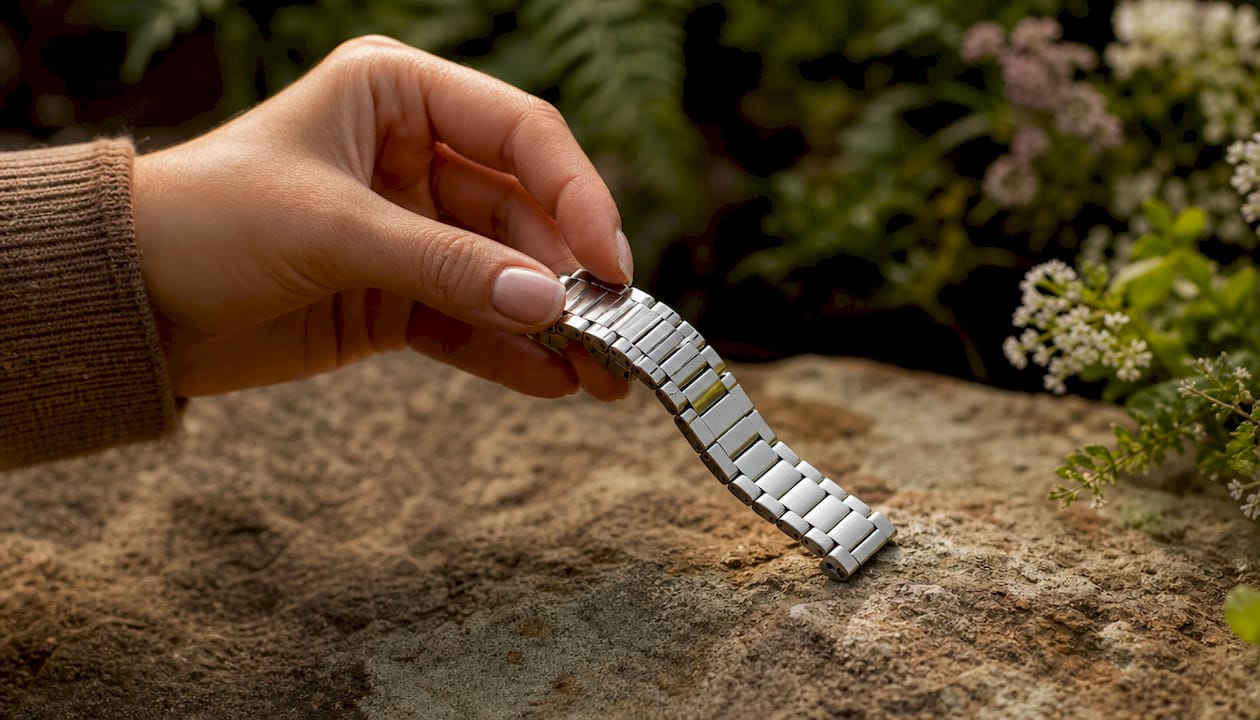
Stainless steel lasts 10–20+ years, making it the longest-lasting option across all common band materials. That lifespan reflects its resistance to corrosion, UV damage, and surface deformation under normal daily stress. The trade-off is weight. Metal bracelets sit heavier on the wrist than rubber or nylon alternatives, which matters during extended wear or physical activity. Wizeband uses 316L stainless steel specifically because it offers superior corrosion resistance compared to lower-grade alloys.
FKM rubber
FKM, short for fluoroelastomer, is the most durable polymer option for watch bands. FKM maintains flexibility from -20°C to +200°C and resists UV, oils, and solvents that degrade standard silicone within months. A quality FKM strap can last 5+ years without cracking or losing elasticity. Standard silicone and fluoroelastomer bands typically last about 2–3 years under the same conditions, so FKM is the clear upgrade for active wearers.
Leather
Leather looks refined but demands consistent maintenance. Without regular conditioning, leather dries, cracks, and stiffens within a year of daily use. Moisture from sweat accelerates that breakdown significantly. Leather is best suited for occasional or office wear rather than all-day, every-day use.
Nylon
Nylon straps are lightweight, breathable, and resistant to moisture. They wear well in warm climates and during workouts but show fraying at edges over time. A stretchy nylon band offers good flexibility and comfort for casual daily use, though it lacks the structural permanence of metal or FKM.
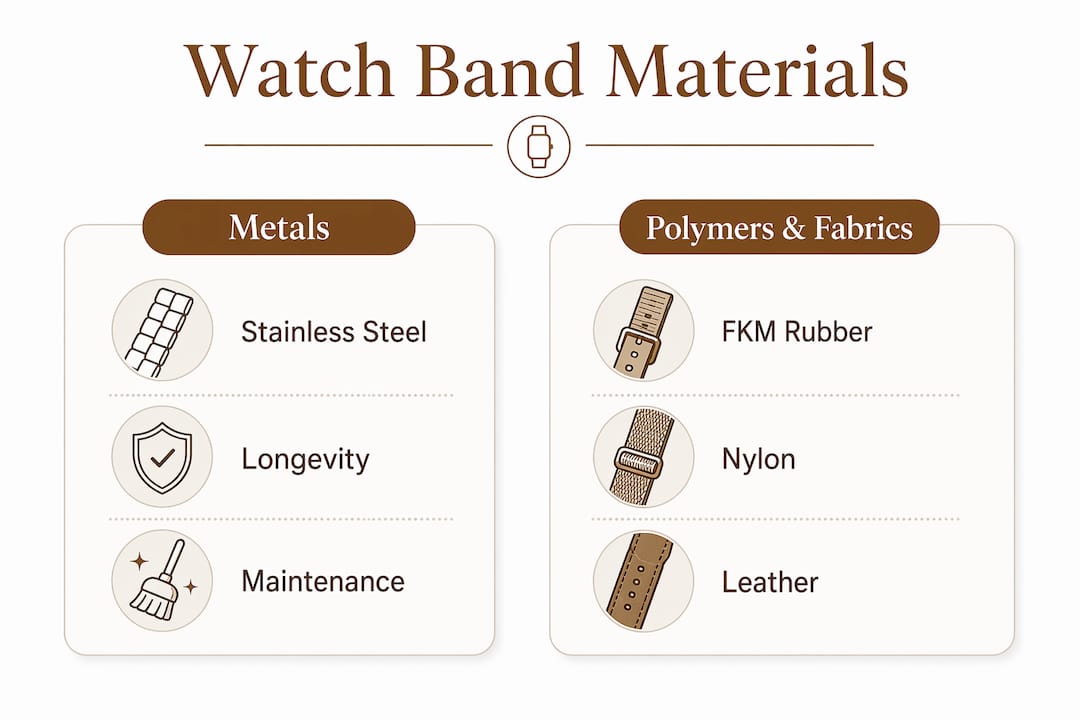
| Material | Typical Lifespan | Sweat Resistance | Maintenance Level |
|---|---|---|---|
| 316L Stainless Steel | 10–20+ years | Excellent | Low |
| FKM Rubber | 5+ years | Excellent | Low |
| Standard Silicone | 2–3 years | Good | Low |
| Leather | 1–3 years | Poor | High |
| Nylon | 2–4 years | Good | Low |
Pro Tip: If you wear your watch during workouts, FKM rubber or stainless steel are the only materials that handle daily sweat exposure without accelerated degradation. Leather and standard silicone will break down faster than their rated lifespans under those conditions.
How does finish and design affect watch band longevity?
The finish on a metal band does more than affect appearance. It directly determines how visible wear becomes over time and how the band ages aesthetically.
Polished vs. brushed vs. mixed finishes
A polished finish reflects light sharply and looks premium out of the box, but it shows fine scratches within weeks of daily wear. A brushed finish hides minor abrasions because its directional texture absorbs surface marks rather than reflecting them. Mixed brushed and polished surfaces create visual depth and signal higher manufacturing quality. That combination also ages more gracefully because the brushed sections mask everyday wear while the polished edges retain their visual contrast.
Mixed finishing is not just an aesthetic choice. It reflects the precision of the manufacturing process. Brands that invest in multi-surface finishing also tend to apply tighter tolerances to link machining and clasp construction.
Hardware and connection points
The finish and material of connection points determine mechanical durability more than any other single factor.
- Hardened stainless steel pins at the lug connection resist bending and shear forces during daily movement.
- Butterfly clasps distribute wrist pressure evenly, reducing stress on any single point.
- Precisely machined lug ends prevent lateral play, which causes rattling and accelerates pin wear.
- Quality connection points are the true mark of durability. Poor engineering here risks watch damage regardless of how good the band material is.
Pro Tip: Before buying any band, flex the lug connection by hand. A well-built band shows no lateral movement at the pin. Any wobble at that joint predicts early failure.
What factors influence comfort in a daily-wear watch band?
Comfort in a daily-wear watch band depends on weight, flexibility, ventilation, and fit. These factors interact differently depending on your activity level and how long you wear the band each day.
-
Weight. Metal bracelets are heavier than rubber, nylon, or leather alternatives. Switching to a lighter band reduces wrist fatigue by over 40% during active use. For desk workers who rarely notice band weight, metal is a non-issue. For runners or people on their feet all day, that weight difference is real and cumulative.
-
Flexibility. Rigid metal links allow less wrist articulation than rubber or nylon. High-quality link bands with individually articulating links compensate for this by conforming to wrist movement rather than resisting it. A stiff band that fights your wrist creates pressure points over a full day of wear.
-
Ventilation. Closed-back rubber and leather bands trap heat and moisture against the skin. Metal link bands allow air circulation between links, which reduces sweat buildup during warm weather. Mesh and nylon bands offer similar ventilation benefits at lower weight.
-
Fit accuracy. A loose band is not just uncomfortable. A loose band forces heart rate sensors to work harder, increasing power draw and reducing sensor accuracy during fitness tracking. A properly fitted band sits snug without cutting off circulation. Wizeband’s quick-adjust link system lets you dial in that fit at home without tools.
-
Skin interaction. Nickel content in low-grade stainless steel causes contact dermatitis in sensitive wearers. 316L stainless steel contains minimal free nickel, making it a safer choice for all-day skin contact. Sweat and skin oils trapped under bands accelerate material breakdown and can trigger irritation, so regular cleaning matters regardless of material.
How to choose and maintain a durable everyday watch band
Choosing the right band starts with matching material to lifestyle. A band that performs well in one context may fail quickly in another.
Selection criteria
Your primary activity during the day should drive your material choice. Office wear with occasional outdoor exposure suits stainless steel well. Active daily use with frequent sweat exposure calls for FKM rubber or a well-ventilated metal link band. If you want one band for all contexts, 316L stainless steel with a mixed finish covers the widest range of scenarios without looking out of place.
Consider owning two bands. A metal band for work and social settings, paired with a rubber or nylon band for workouts, extends the life of both and keeps each performing at its best. This approach also protects your smartwatch sensors by ensuring the band always fits correctly for the activity.
Pro Tip: Check whether the band uses a quick-release or tool-free adjustment system before you buy. Bands that require a watchmaker to resize often go unadjusted, leading to poor fit and accelerated wear at the clasp.
Maintenance by material
| Material | Cleaning Method | Frequency | Key Pitfall to Avoid |
|---|---|---|---|
| Stainless Steel | Warm water, soft cloth | Weekly | Avoid abrasive cleaners that strip finish |
| FKM Rubber | Rinse with water, mild soap | After workouts | Sunscreen residue degrades polymer surface |
| Leather | Dry wipe, leather conditioner | Monthly | Never submerge; moisture causes cracking |
| Nylon | Hand wash, air dry | Weekly | Machine washing frays edges faster |
Metal bracelet longevity is often limited by clasp and link pin wear rather than metal fatigue. Tightening loose pins or replacing worn clasps restores full function and extends usability by years. This is a simple, low-cost service that most jewelers and watch shops offer.
For rubber and silicone bands, the main enemy is chemical exposure. Regular rinsing after workouts removes sweat, sunscreen, and skin oils that break down polymer structure over time. A band that gets rinsed daily will outlast one that gets cleaned monthly by a significant margin.
You can also check out Wizeband’s guide on stainless steel Apple Watch bands for a deeper look at how metal bands compare to sport options in real daily use.
Key Takeaways
A durable everyday watch band requires the right material, precise hardware, a protective finish, and consistent maintenance to deliver long-term performance and comfort.
| Point | Details |
|---|---|
| Material determines lifespan | Stainless steel lasts 10–20+ years; FKM rubber lasts 5+ years; leather needs high maintenance. |
| Finish affects aging | Mixed brushed and polished finishes hide wear better and signal higher manufacturing quality. |
| Hardware quality is critical | Hardened pins and precise lug machining prevent mechanical failure at connection points. |
| Fit impacts device performance | A loose band reduces smartwatch sensor accuracy and increases battery drain during tracking. |
| Maintenance extends lifespan | Rinsing bands after workouts and cleaning weekly prevents premature material breakdown. |
Why I stopped treating watch bands as an afterthought
Most people spend real money on a smartwatch and then grab the cheapest band available. I did the same thing for years. The band failed within months, the clasp rattled, and the finish looked worn before the watch itself showed any age.
What changed my thinking was paying attention to connection points. A band can use premium material and still fail at the lug pin within six months if the machining is sloppy. That single detail separates a band that lasts two years from one that lasts ten.
The other thing I underestimated was finish selection. A fully polished band looks great in the store and looks scratched within a week of daily wear. A mixed brushed and polished finish ages gracefully because the brushed sections absorb minor abrasion. That is not a luxury feature. It is a practical one.
My honest recommendation: match your band to your actual daily activity, not your aspirational one. If you work at a desk and want a metal band that looks sharp, a well-finished metal strap in 316L steel will outlast anything else you can put on your wrist. If you are active, pair it with a rubber band for workouts. Two bands used correctly will outlast one band used for everything.
— John
Wizeband’s metal bands for everyday wear
Wizeband designs metal Apple Watch bands that hold up to daily wear without sacrificing appearance. Every band uses 316L stainless steel, butterfly clasps, and a quick-adjust link system for a precise fit at home.
The lineup covers five band families in finishes including Silver Gold, Starlight, Rose Gold, and Gold, all compatible with Apple Watch Series 4–10, SE, and Ultra 2. The Aura Metal Band is the flagship daily-wear option, combining a refined mixed finish with secure hardware built for long-term use. If you want more color options, the Themis Stainless Band offers four finishes in the same durable 316L construction. Both ship with Wizeband’s sizing tool for a custom fit out of the box.
FAQ
What is a durable everyday watch band made of?
The most durable everyday watch bands use 316L stainless steel or FKM rubber. Stainless steel lasts 10–20+ years, while FKM rubber resists chemicals, UV, and temperature extremes for 5+ years without degradation.
How long does a daily-wear watch band typically last?
Lifespan depends on material. Stainless steel bands last 10–20+ years with basic maintenance. FKM rubber lasts 5+ years. Standard silicone and leather bands typically last 2–3 years under daily wear conditions.
Does the finish on a metal band affect how long it looks good?
Mixed brushed and polished finishes age better than fully polished surfaces. Brushed sections absorb minor scratches rather than reflecting them, so the band maintains its appearance longer under daily use.
Can a loose watch band damage my smartwatch?
A loose band forces heart rate sensors to work harder to maintain skin contact, which increases battery consumption and reduces tracking accuracy. A properly fitted band protects both comfort and device performance.
How often should I clean my watch band?
Clean metal and rubber bands at least once a week with warm water and a soft cloth. Rinse rubber bands after every workout to remove sweat, sunscreen, and skin oils that accelerate material breakdown.
Recommended
From the blog
View all


Leave a comment