


What Makes a Watch Band Jewelry-Like: 2026 Guide
A jewelry-like watch band is defined by its use of premium materials, precise design proportions, and seamless integration that transforms a functional strap into an elegant accessory. The industry term for this category is “jewelry-grade watch band,” and it draws directly from fine jewelry standards. Three criteria separate a jewelry-grade band from an ordinary one: the metal alloy used, the proportions of the band relative to the watch case, and how cleanly the band connects to the watch housing. Understanding what makes a watch band jewelry-like helps you make a deliberate choice rather than a decorative one.
What makes a watch band jewelry-like: materials first
The material is the single biggest factor in whether a band reads as jewelry or as sportswear. 316L stainless steel is the industry standard for jewelry-grade watch bands. Its molybdenum content (2–3%) resists corrosion from sweat and moisture, which means the band keeps its finish over years of daily wear. That durability is exactly what separates it from decorative-only materials.
Weight is part of the equation too. 316L steel provides a substantial, bracelet-like density that silicone, nylon, and aluminum bands simply cannot replicate. When a band hangs naturally on the wrist with a slight, satisfying weight, the brain registers it as jewelry. Lightweight bands feel like gear.
Here is how common band materials compare on the jewelry scale:
- 316L stainless steel: Highest jewelry credibility. Corrosion resistant, weighty, and available in polished, brushed, and PVD finishes.
- Leather: Strong secondary option for formal looks. Genuine full-grain leather reads as refined, though it lacks the bracelet weight of metal. Wizeband’s luxury leather bands show how leather can still achieve an elevated look.
- Silicone and rubber: Functional for sport. No jewelry association regardless of color or texture.
- Aluminum: Lightweight and affordable, but the hollow feel undermines any luxury perception.
- Fabric and nylon: Casual by default. Works for weekend wear, not for jewelry styling.
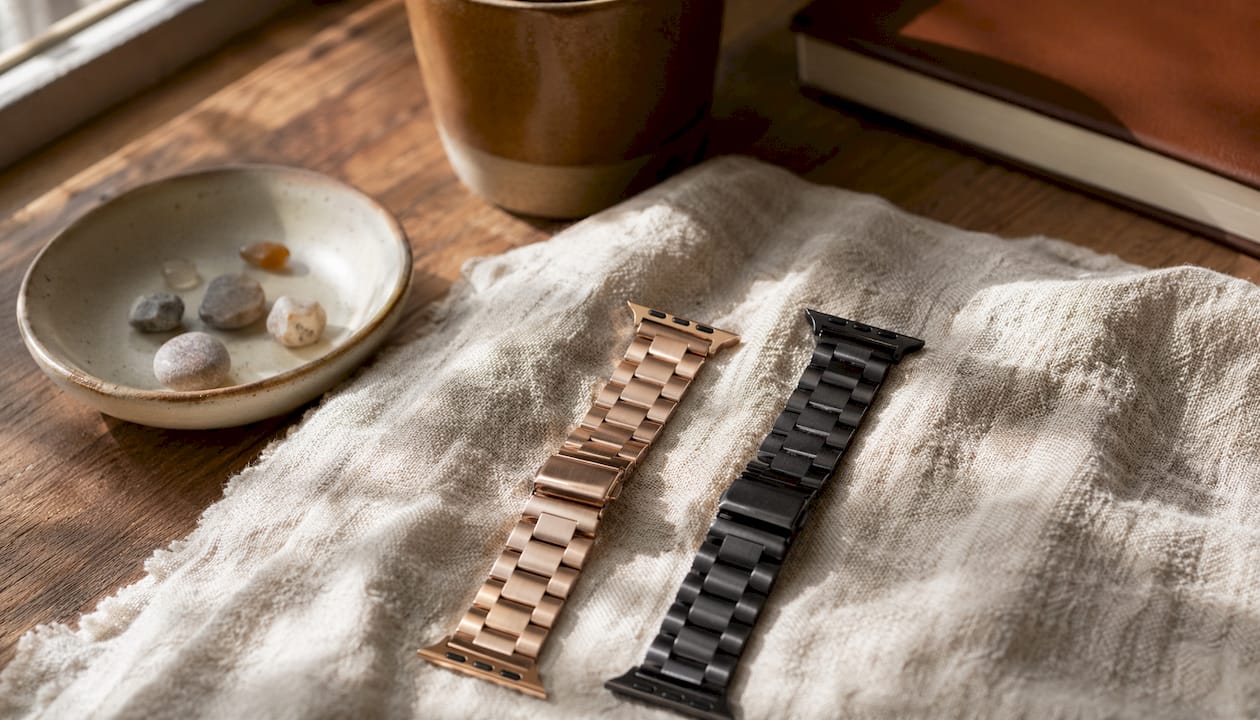
Metal finishes add another layer of differentiation. A polished finish reflects light the way a gold bracelet does. A brushed finish creates a matte depth that reads as understated luxury. PVD (physical vapor deposition) coatings in gold, rose gold, and black add color without sacrificing durability, since PVD bonds at the molecular level rather than sitting on top like paint.
Pro Tip: Mix a polished watch case with a brushed band finish. The contrast creates visual depth and prevents the wrist from looking flat, which is exactly what fine jewelry stylists do with two-tone bracelets.
How do design proportions affect the jewelry look?
Proportions determine whether a band looks like a bracelet or a wristband. Band widths between 18–20mm are the standard recommendation for a dressier, jewelry-appropriate look. Narrower bands read as delicate and refined. Wider bands (22–24mm) shift the visual weight toward athletic or casual territory.
Link style is equally important. The three link types that most closely mimic fine bracelets are:
- Milanese mesh: A woven metal weave with a fluid drape. It moves like a fabric bracelet and catches light across its surface. Milanese and fine mesh bands work especially well for evening and formal occasions.
- Solid link: Individual rectangular or oval links connected by pins. This is the closest analog to a classic gold bracelet. Wizeband’s metal link band guide covers how link shape affects the overall style read.
- Fine chain: Multiple thin chains running in parallel. This style is distinctly feminine and reads as high jewelry rather than sport accessory.
Metal tone coordination ties everything together. Wearing a rose gold band with a silver watch case creates a visual conflict that breaks the jewelry illusion. Matching the dominant metal tone across your band, watch case, and other worn jewelry creates the cohesive look that makes a wrist stack read as intentional.
| Band finish | Best pairing | Occasion |
|---|---|---|
| Polished gold | Yellow gold jewelry, warm skin tones | Evening, formal |
| Brushed silver | White gold or platinum pieces | Office, daytime formal |
| Rose gold PVD | Rose gold rings or earrings | Brunch, casual formal |
| Matte black PVD | Minimal, monochrome outfits | Business casual, modern formal |
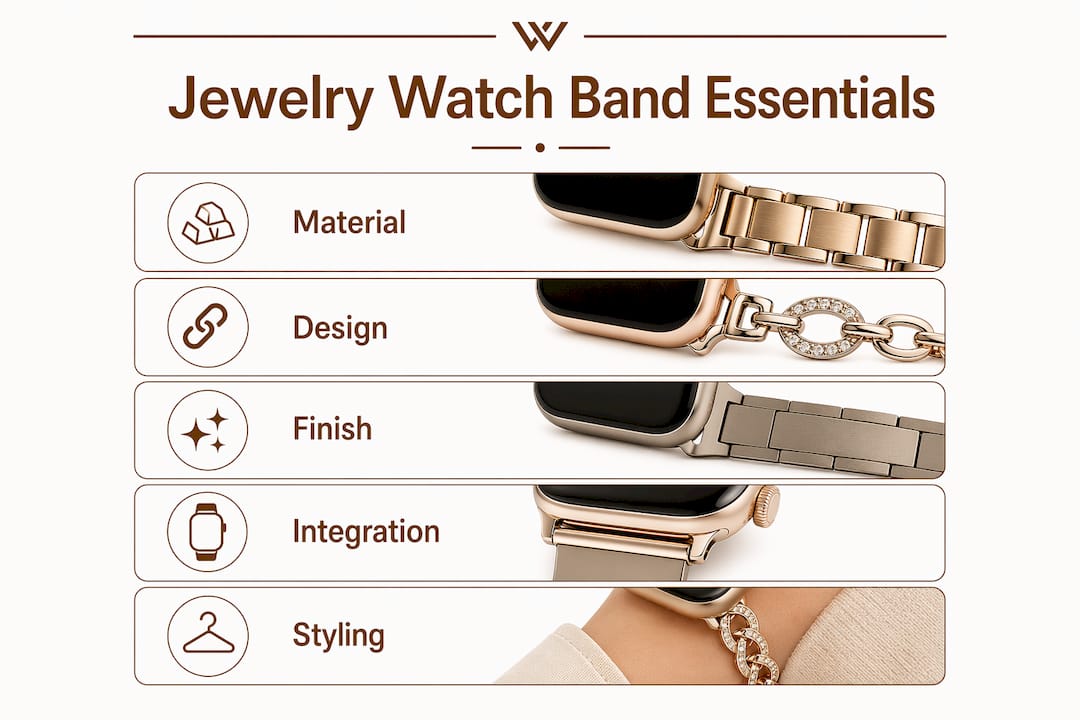
Pro Tip: A polished watch case paired with a matte or textured band creates the kind of tonal contrast that prevents a flat, one-note appearance. This is a standard technique in fine jewelry design.
Does seamless integration really change how a band looks?
Yes. The connection point between band and watch case is where most jewelry-grade attempts fail. Seamless lug-to-case integration with finish-matching adapters creates a smooth visual transition from band to watch body. A gap, a color mismatch, or a bulky adapter immediately signals “tech accessory” rather than “fine jewelry.”
The details that define high-quality integration include:
- End-links that match case curvature: Bespoke end-links follow the curve of the watch housing so the band appears to grow out of the case rather than attach to it.
- Finish-matched adapters: The adapter connecting band to lug must share the same finish as both the case and the band. A polished adapter between a brushed band and a polished case creates a jarring visual break.
- Butterfly and jewelry clasps: A butterfly clasp folds flat against the wrist and disappears under the band. Standard pin-and-tuck buckles add bulk and interrupt the bracelet silhouette.
- Engraved or detailed clasp faces: Luxury watches often feature engraved logos or decorative patterns on clasps. This detail signals craftsmanship and elevates the band from functional to ornamental.
Luxury watch designers describe the goal as blending band and housing into a single artistic object rather than attaching decorative elements to a tech device. That philosophy applies directly to smartwatch bands. Wizeband builds its bands with butterfly clasps and finish-matched end-links for exactly this reason.
Styling techniques that complete the jewelry effect
The band alone does not create a jewelry look. The watch face, your other accessories, and how you layer pieces all contribute.
Watch face selection matters more than most people realize. Analog-style or minimalist watch faces complement jewelry-grade bands far better than data-heavy fitness displays. A face showing heart rate zones, step counts, and weather widgets clashes with a fine mesh band. A clean analog face with a simple dial reinforces the jewelry read. Watch faces that mimic guilloché patterns, enamel, or mother-of-pearl textures push the effect even further.
Coordinate your metal tones across your full wrist stack. The dominant metal on your band should appear at least once more on your wrist, whether in a ring, a bracelet, or an earring. This repetition signals intentional styling rather than coincidence. Wizeband offers finishes in Silver Gold, Starlight, Rose Gold, and Gold to make this coordination straightforward.
Layering amplifies the jewelry effect. Wearing a fine chain bracelet or a delicate bangle alongside a metal watch band creates the stacked look associated with high jewelry. Keep the scale consistent: a chunky link band does not layer well with a thin chain bracelet. Match the visual weight of each piece.
Texture adds dimension. A textured band in brushed steel or fine mesh reads differently than a flat polished surface. For couture or evening looks, some stylists pair a metal watch with a silk ribbon or a fine leather strap to introduce softness alongside the metal. Wizeband’s Agatha Metal Strap and the Aura Metal Band both offer textural variation within a metal construction.
For those building a broader accessory wardrobe, leather watch cases for collectors offer a useful reference for how material quality and storage affect long-term finish preservation.
Key Takeaways
A watch band achieves jewelry-grade status through the combination of 316L stainless steel construction, proportional design between 18–20mm width, and seamless lug-to-case integration with finish-matched adapters and butterfly clasps.
| Point | Details |
|---|---|
| Material defines credibility | 316L stainless steel provides the weight, finish, and corrosion resistance that silicone and aluminum cannot match. |
| Width determines dress code | Bands between 18–20mm read as dressier; wider bands shift toward casual or sport styling. |
| Integration makes or breaks the look | Finish-matched adapters and butterfly clasps create a seamless band-to-case connection that reads as jewelry. |
| Metal tone coordination is non-negotiable | Match your band finish to your watch case and other worn jewelry for a cohesive, intentional look. |
| Watch face completes the effect | Analog or minimalist faces reinforce the jewelry aesthetic; data-heavy displays undermine it. |
Why tech and jewelry are finally speaking the same language
The tension between smartwatch function and jewelry aesthetics has always been real. For years, the default assumption was that you had to choose one or the other. What I have observed over time is that the brands and wearers who get this right do not try to hide the technology. They simply apply jewelry-making standards to the band itself.
The luxury watch market has bifurcated into bold artistic pieces and understated miniaturized wristwear that functions as subtle personal luxury. Smartwatch bands sit squarely in that second category when executed well. The Apple Watch case is a given. What you do with the band is entirely your choice.
The most underrated factor is modularity. A single watch body can read as gym gear at 7 AM and as a dinner accessory at 7 PM if you invest in two or three quality bands. That flexibility is something traditional jewelry cannot offer. A well-chosen metal band from Wizeband costs a fraction of a fine bracelet and delivers the same wrist presence for formal occasions.
My honest advice: start with material and clasp quality before worrying about style. A beautiful band with a cheap buckle will always look like a costume. Get the construction right first, and the styling follows naturally.
— John
Wizeband’s metal bands for a jewelry-grade Apple Watch
Wizeband has designed its entire lineup around the criteria that define a jewelry-grade band: 316L stainless steel construction, butterfly clasps, finish-matched end-links, and a quick-adjust system that removes the need for a jeweler’s tool.
The Wizeband Essentials Bundle gives you multiple finishes in one purchase, so you can coordinate with different outfits and metal tones without buying individual bands separately. For a single statement piece, the Gaia Metal Strap delivers a polished, bracelet-style look compatible with Apple Watch Series 4–10, SE, and Ultra 2. Every band ships in two size groups to remove the guesswork at checkout. If you want to see the full range of link styles and finishes, the Wizeband band catalog covers every family in detail.
FAQ
What is a jewelry-grade watch band?
A jewelry-grade watch band uses 316L stainless steel, a butterfly or jewelry clasp, and finish-matched end-links to create a bracelet-like appearance on the wrist. The term refers to bands that meet the material and construction standards associated with fine jewelry rather than functional sportswear.
What band width looks most like jewelry?
Band widths between 18–20mm are the standard recommendation for a dressier, jewelry-appropriate look. Narrower bands read as more delicate and refined compared to wider sport-oriented widths.
Does the watch face affect whether a band looks like jewelry?
Yes. Analog-style or minimalist watch faces complement jewelry-grade bands far better than data-heavy fitness displays. A clean dial reinforces the jewelry read, while complex fitness screens undermine it regardless of band quality.
What metal finish is best for a jewelry look?
Polished finishes reflect light like fine gold jewelry and work best for formal occasions. Brushed finishes create a matte depth suited to office and daytime formal wear. PVD coatings in gold, rose gold, and black add color with strong durability.
How does clasp design affect the jewelry appearance?
A butterfly clasp folds flat against the wrist and disappears under the band, maintaining the bracelet silhouette. Standard pin-and-tuck buckles add visible bulk and interrupt the clean line that defines a jewelry-like band.
Recommended
From the blog
View all


Leave a comment