


Which Gold Tones Actually Flatter Your Skin Undertone
Warm undertones look best in rich yellow gold or warm rose gold. Cool undertones do better in pale champagne gold, muted rose gold, or two-tone pieces that cut the yellow reflection. Neutral undertones can wear almost any gold finish and should let personal style make the call. That’s the short answer, and it holds true whether you’re shopping for a ring, a necklace, or a gold-tone Apple Watch band.
The exceptions matter as much as the rule. A fair-skinned cool undertone can still wear pale champagne gold without looking washed out, since the low intensity keeps the yellow cast subtle. A deep warm complexion often looks better in richer yellow gold tones than in anything pale, because a light finish gets visually swallowed against darker, warmer skin.
Here’s a fast way to test this yourself before you buy anything:
- Hold a warm yellow-gold piece and a cool silver-tone piece against your inner wrist in daylight.
- Notice which one makes your skin look brighter and which makes it look duller or slightly gray.
- If neither wins clearly, you’re likely neutral, and either metal (or a two-tone mix) will work.
Quick visual check: Rich yellow gold against olive or golden-brown skin tends to look seamless, almost like an extension of the skin. The same yellow gold against pink-toned fair skin can look slightly harsh, while champagne gold on that same skin looks soft and lit-from-within.
Key Takeaways
Gold-tone bands complement skin tones because warm undertones absorb gold’s warm reflection evenly, while cool undertones need paler or two-tone gold to avoid a harsh contrast.
| Point | Details |
|---|---|
| Identify your undertone first | Use the vein test, jewelry test, and sun reaction test together, and trust the majority result. |
| Test metals in daylight | Indoor lighting distorts how gold reads against skin, so always compare near a window. |
| Choose two-tone if unsure | Two-tone bands bridge warm and cool surfaces and work well for neutral or ambiguous undertones. |
| Match finish to depth of warmth | Champagne suits fair-warm skin, matte antique suits soft autumn tones, rich yellow suits deep warm skin. |
| Pick 316L stainless steel for daily wear | WizeBand’s gold-tone 316L bands hold their finish through daily wear far better than thin plating. |
Table of Contents
- Why Gold-Tone Bands Complement Skin Tones the Way They Do
- How Do You Know If Your Undertone Is Warm, Cool, or Neutral?
- Which Gold Tones Work Best for Each Undertone?
- How Do You Style Gold-Tone Bands to Flatter Your Complexion?
- Solid Gold, Vermeil, Plated, or Gold-Tone Stainless Steel: What’s the Difference?
- How Do You Keep Gold-Tone Bands Looking New?
- Why 316L Stainless-Steel Gold-Tone Bands Work So Well for Daily Wear
- An Editor’s Take on Choosing Gold for Everyday Wear
- Get the Gold-Tone Look Built to Handle Daily Wear
- Sources
Why Gold-Tone Bands Complement Skin Tones the Way They Do
Gold reflects warm light back onto the skin, which is exactly why it reads as flattering on warm undertones and can feel like too much on cool ones. Skin with yellow or golden undertones absorbs that warm reflection and looks more even. Skin with pink or blue undertones reflects it differently, sometimes creating a slightly sallow or overly bright contrast against the metal.
This is the same mechanism that makes stylists tell clients to hold a napkin or piece of fabric near their face before choosing a lip color. Metal works the same way, just with more permanence, since you’re wearing it daily rather than for one photo. According to James Allen’s jewelry guide, warm undertones are consistently flattered by yellow and rose gold, while cool undertones tend to look better in silver, white gold, or platinum. Neutral undertones sit in the middle and can borrow from either camp.
That’s the industry-standard framework: undertone-to-metal matching, sometimes called “color analysis” in styling circles. It’s the same logic used for choosing clothing colors and makeup shades, just applied to jewelry and watch bands instead.
How Do You Know If Your Undertone Is Warm, Cool, or Neutral?
Three simple tests give you a reliable answer in under five minutes, and you don’t need any tools beyond a window and maybe a piece of jewelry you already own.
The vein test. Look at the veins on the inside of your wrist in natural light. Green veins usually mean a warm undertone. Blue or purple veins point to cool. If you genuinely can’t tell, or you see a mix, you’re likely neutral.
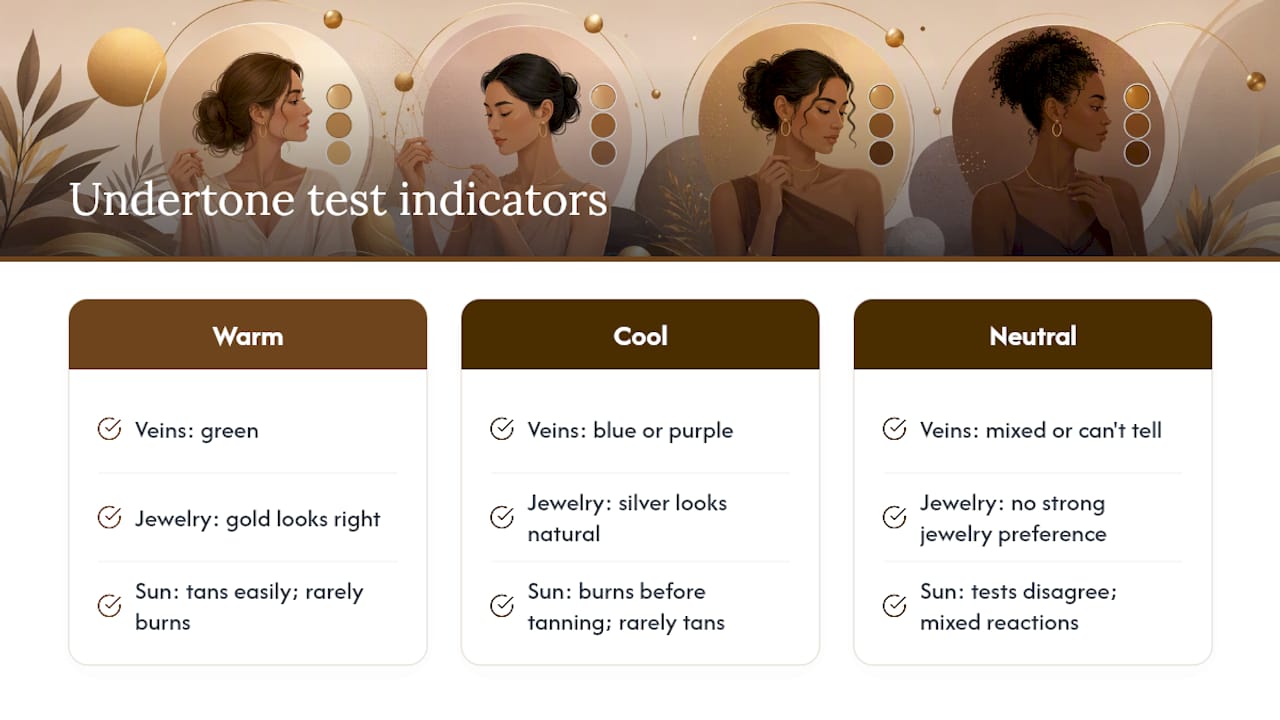
The jewelry test. Pull out your favorite pieces, whatever you reach for most often. If your closet leans gold and it’s always looked right, that’s a strong warm-undertone signal. If silver pieces have always felt more natural against your skin, you’re probably cool.
The sun reaction test. Think about how your skin responds to sun exposure. Skin that tans easily and rarely burns tends to run warm. Skin that burns before it tans, or burns without tanning much at all, tends to run cool.
If these three tests disagree with each other, don’t panic. Undertone isn’t always binary, and Austen & Blake’s guide to wedding ring metals notes that a mixed result from the vein test is itself a sign you’re neutral, which means you have more flexibility, not less.
Pro Tip: Do every test in natural daylight, not under indoor bulbs. Fluorescent and warm-toned indoor lighting can shift how a metal reads against your skin by a surprising margin, so a band that looks perfect under your bathroom light might look completely different on the street.
Eye color and the colors you naturally gravitate toward in clothing can serve as backup evidence too. Cool-toned blue or gray eyes often pair with cool undertones, while hazel or deep brown eyes often show up alongside warm ones, though this is a supporting clue, not a standalone rule.
Which Gold Tones Work Best for Each Undertone?
Once you know your undertone, the metal choice narrows fast. Here’s how it breaks down in practice.
Warm undertones look best in richer, more saturated golds. Classic yellow gold with an 18-karat look reads as an extension of the skin rather than a contrast to it. Warm rose gold, the kind with more copper in the alloy, works nearly as well. Finish matters here too: a high-shine polish amplifies warmth and works beautifully on golden or olive skin, while a soft matte or antique finish suits someone with a more muted, autumn-leaning warm complexion.
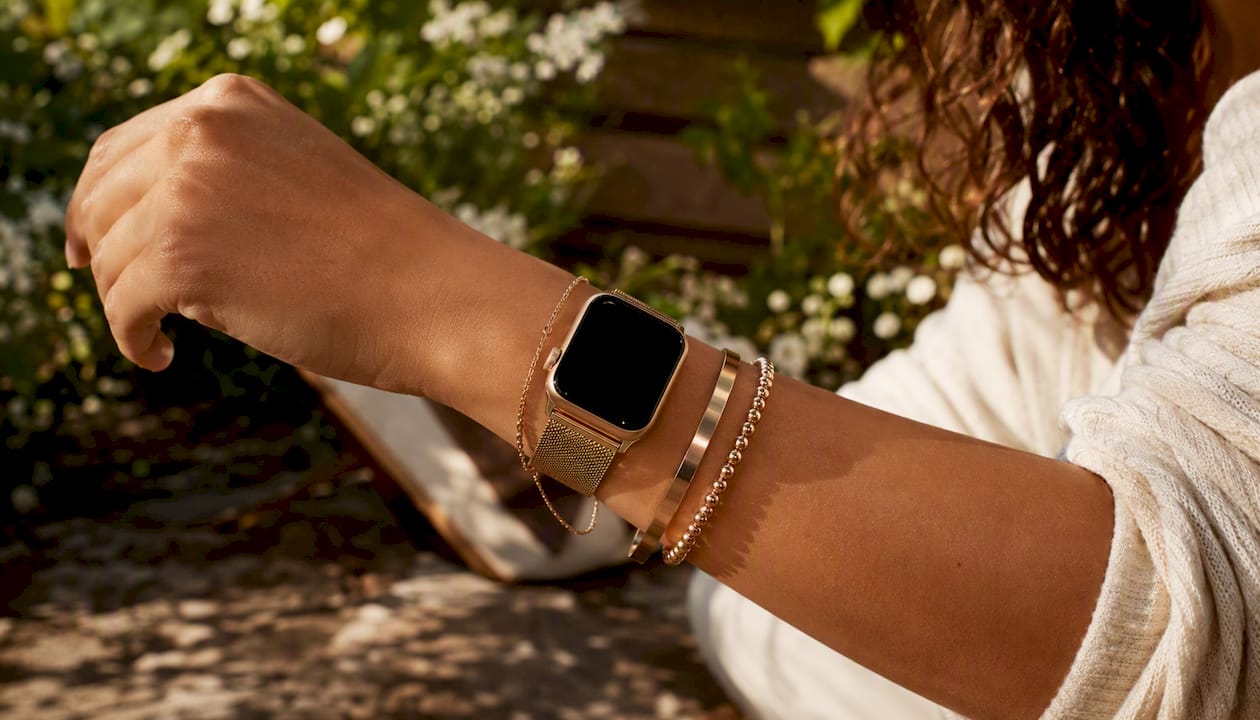
Cool undertones aren’t locked out of gold, they just need to choose more carefully. Pale champagne gold, muted rose gold, and two-tone bands (gold paired with silver-tone metal) all reduce the intensity of the yellow reflection that can otherwise clash. VRAI’s jewelry guide points out that cool undertones traditionally lean toward silver or platinum, but low-intensity gold finishes and two-tone pieces give cool-toned people a real way into gold without the harsh cast that a saturated yellow gold can create.
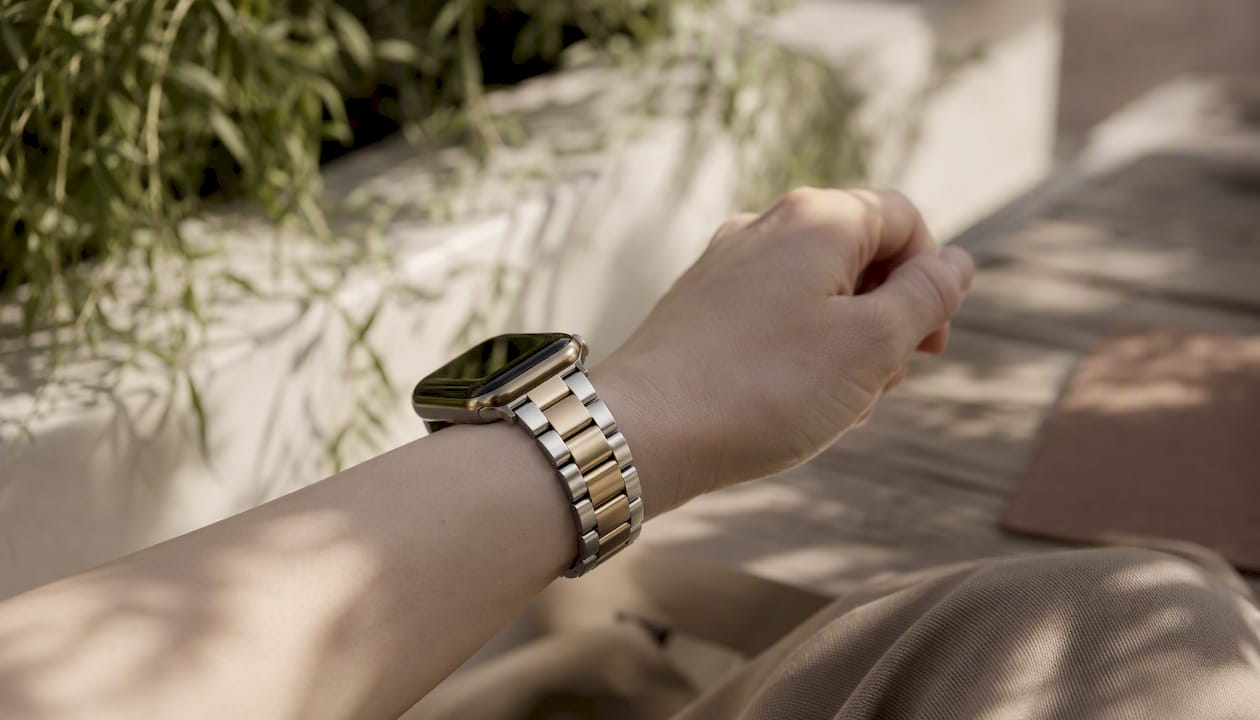
Neutral undertones have the most freedom of anyone. Because neutral skin balances pink and golden hues evenly, both gold-tone and silver-tone pieces tend to look equally natural, and the VRAI journal confirms this balance shows up in the vein and jewelry tests too. If that’s you, the decision comes down to what you’re pairing the band with, not what your skin demands.
Finish and depth of gold change the equation as much as the base color does. Palette Hunt’s guide to gold and skin tone breaks this down by palette: champagne gold suits fair-warm skin, matte antique gold suits soft autumn types, and rich saturated yellow gold suits deep warm tones.
A band that’s too wide and too shiny can overwhelm a smaller wrist or fairer skin, turning a flattering metal into a distracting one. Width and finish intensity work together, so a bold yellow gold often looks best in a slimmer, more refined band rather than a chunky one.
Band width plays a real role here that most people overlook. A wide, high-polish gold band throws more light and color onto the skin than a slim one does, which means the same gold tone can read as elegant on one wrist and overpowering on another, purely based on proportion.
How Do You Style Gold-Tone Bands to Flatter Your Complexion?
Styling is where undertone theory turns into everyday practice, and it’s more forgiving than the rules above might suggest.
Two-tone bands solve the “which one” problem. If you’ve tested your undertone and still aren’t sure, or you simply own jewelry in both gold and silver, a two-tone band lets you skip the decision entirely. It bridges warm and cool surfaces right at the wrist, which is exactly why it works so well for people with ambiguous or neutral undertones. If you’re building a wardrobe around one band, our style guide to Apple Watch band color combinations walks through how to make a single band work across multiple outfit palettes.
Gemstones can reinforce or soften your metal choice. Warm gemstones like citrine, garnet, or amber deepen the effect of yellow gold. Cool gemstones like sapphire, aquamarine, or amethyst pair naturally with pale gold or rose gold, softening the metal’s warmth without fighting it. Brilliant Earth’s jewelry buying guide treats gemstone choice as a supporting decision alongside metal tone, not a separate one, and eye color often nudges that choice too.
Makeup and clothing colors either back up or undercut your metal. Warm lipsticks and warm-toned clothing reinforce a yellow-gold band’s effect. Cool-toned makeup and blue-based clothing colors tend to pair more naturally with pale gold or two-tone pieces. For readers thinking through this beyond jewelry, Lingerie Seduction’s guide to picking colors for your skin tone applies the same undertone logic to fabric and color choice, and the overlap with metal selection is closer than most people expect.
Stacking works when you commit to a direction. Mixing three different gold tones on one wrist usually looks accidental. Mixing one dominant tone with a single accent, gold with one silver charm, or a two-tone band with a solid gold ring, reads as intentional.
Pro Tip: If you’re stacking a watch band with rings or bracelets, match the dominant metal first and treat any second metal as an accent, not an equal partner. A 70/30 split almost always looks more deliberate than a 50/50 one.
Solid Gold, Vermeil, Plated, or Gold-Tone Stainless Steel: What’s the Difference?
The look of gold can come from four very different materials, and the differences matter more for daily-wear pieces like watch bands than they do for jewelry you save for special occasions.
| Material | What it is | Durability | Best for |
|---|---|---|---|
| Solid gold | Gold alloy throughout, typically 18-karat | Very durable, never fades, but soft and can scratch | Fine jewelry worn occasionally |
| Gold vermeil | Thick gold layer over sterling silver | Moderate; thickness helps it outlast thin plating | Jewelry with some daily wear |
| Gold-plated | Thin gold layer over base metal | Wears down fastest, needs re-plating | Occasional-wear fashion pieces |
| Gold-tone 316L stainless steel | Gold-colored finish bonded to surgical-grade steel | Highly durable, resists corrosion and fading | Daily-wear accessories like watch bands |
Solid gold never loses its color because the color goes all the way through, but it’s genuinely soft, which means dents and scratches show up fast on something you take on and off every day. Vermeil sits in the middle: a thicker gold layer than standard plating, applied over sterling silver, so it holds up longer but still isn’t built for constant contact with skin oils, lotion, and friction.
Gold-plated pieces are the most vulnerable. The New York Post reported that jewelers have leaned harder into gold-plated and vermeil pieces as gold prices climbed, since a thin plated layer lets brands offer the gold look at a lower price point. The tradeoff is that thin plating wears thin at contact points, exposing the base metal underneath with regular daily wear over time.
This is where gold-tone 316L stainless steel earns its place. The finish is bonded to a steel base that resists corrosion, doesn’t react with skin the way some base metals do, and holds up to daily friction far better than thin plating. If you’re also weighing skin sensitivity in your decision, our guide to Apple Watch bands for sensitive skin covers which materials are least likely to cause irritation.
How Do You Keep Gold-Tone Bands Looking New?
Care routines differ depending on which material you’re working with, but a few habits apply across the board.
- Apply perfume, lotion, and hairspray before putting on your band, not after, since chemical exposure is one of the fastest ways to dull a gold finish.
- Avoid chlorine and saltwater when possible, particularly with plated or vermeil pieces, since both accelerate wear at the surface layer.
- Wipe your band down with a soft, dry cloth after wearing it, especially if you’ve been sweating or exercising.
- Store bands separately, ideally in a soft pouch, to prevent metal-on-metal scratching when they’re not in use.
- Deep-clean gold-tone stainless steel occasionally with mild soap and warm water; skip harsh jewelry cleaners on plated or vermeil pieces since the abrasives can strip a thin gold layer faster than normal wear does.
Pro Tip: Do a quick spot test on the inside of a clasp before using any cleaning product for the first time. If the finish looks even after a gentle test spot, it’s safe to clean the rest of the band the same way.
Frequency of wear matters more than most people assume. A band worn every single day will show wear patterns faster than one rotated with two or three others, simply because it’s absorbing constant friction from your skin, cuffs, and desk surfaces. Rotating bands, even just two, roughly doubles the time before you’ll notice fading or scratching on either one.
Why 316L Stainless-Steel Gold-Tone Bands Work So Well for Daily Wear
316L stainless steel is a surgical-grade alloy, and it earns that classification because of low nickel reactivity and strong resistance to corrosion, sweat, and everyday chemical exposure. That combination makes it hypoallergenic for most people and tough enough to hold a gold-tone finish through months of daily contact without flaking or dulling the way thinner plated metals do.
The steel base also gives manufacturers more control over the finish. A gold-tone PVD or rhodium-adjacent coating bonds tightly to 316L steel, which means the finish can mimic the visual richness of higher-karat gold, that deep warm shine warm undertones look for, without the fragility of a thin plated layer over a softer base metal. Industry observations on gold-tone accessories point to the same conclusion: 316L stainless steel gives buyers a durable, more affordable way to wear the gold look daily, rather than reserving it for occasional pieces.
WizeBand builds its gold-tone bands, including finishes like Rose Gold and Silver Gold, on exactly this foundation, which is why they’re designed to be worn every day rather than saved for special occasions. A band meant for daily rotation with work outfits, gym sessions, and everything in between needs a finish that survives contact with skin oils, hand sanitizer, and the occasional splash of water, and that’s the gap 316L steel closes.
Pro Tip: When comparing gold-tone options, ask about the base metal, not just the finish name. A “gold-tone” band over 316L stainless steel will typically outlast a “gold-plated” band over a softer alloy, even if the two look identical on a store shelf.
An Editor’s Take on Choosing Gold for Everyday Wear
Most guides treat undertone matching like a strict rulebook, and that’s where they lose people. In practice, the rule that matters most is simpler: if a gold tone makes your skin look brighter and more awake in daylight, wear it, regardless of what the vein test technically says.
My rule of thumb after looking at how this plays out across warm, cool, and neutral skin: prioritize look over longevity when you’re buying something for a specific outfit or event you’ll wear once or twice. Prioritize longevity, meaning 316L gold-tone steel over thin plating, when you’re buying something you plan to put on every single morning without thinking about it. A watch band falls firmly into that second category for most people, which is exactly why the material question deserves more attention than most style guides give it.
The undertone tests are a genuinely useful starting point, not a verdict. Use them to narrow your options, then trust what you actually see in the mirror over what a test result says you’re supposed to prefer.
Get the Gold-Tone Look Built to Handle Daily Wear
Once you know your undertone, the harder problem is finding a gold-tone piece that actually survives daily wear instead of thinning out within a season, and that’s the gap WizeBand’s 316L stainless-steel bands are built to close.

For warm undertones, the Aura Metal Band delivers that richer, high-shine gold look that reads as an extension of golden or olive skin rather than a contrast to it. If you’re cool-toned or still testing the waters, the Gaia Metal Strap offers a softer rose-gold finish with less intensity, closer to the low-cast champagne effect that works on fairer, pinker skin. Genuinely unsure where you land, or just want flexibility? The Themis Stainless Band comes in four finish options, so you can switch between gold tones and silver-tone looks without buying a second band.
Every WizeBand band fits Apple Watch Series 4 through 10, SE, and Ultra 2, and comes in two simple size groups so there’s no guesswork at checkout. If you’re deciding between a wider, bolder band or a slimmer one, remember that width amplifies whatever finish you choose, so a slimmer band is usually the safer bet if you’re new to gold tones.
Browse the gold-tone collection and find the finish that matches what you saw in your own daylight test.
Sources
- Should I Choose Silver or Gold Jewelry for My Skin Tone | VRAI Journal
- How To Choose The Right Jewelry For Your Skin Tone - James Allen Blog
- What Color Jewelry Should I Wear? | Brilliant Earth
- What Skin Tone Suits Gold? | Palette Hunt
- How to Choose Wedding Ring Metals for Your Skin Tone | Austen & Blake
Recommended
From the blog
View all


Leave a comment