


Why Watch Band Quality Determines All-Day Wrist Comfort
Watch band quality affects comfort because it controls three things at once: pressure distribution across your wrist, breathability against your skin, and how precisely the band holds a smartwatch’s sensors in place. A poorly made band concentrates pressure at pinch points, traps sweat, and slides out of position. A well-made one spreads weight evenly and stays put.
Three pillars decide the outcome:
- Material — what touches your skin and how it handles moisture and heat
- Construction — lining, edge finishing, thickness, and clasp design
- Fit and placement — sizing accuracy and where the band sits on your wrist
Apple’s own fitting guidance recommends the one-finger test as a baseline check, tightening slightly for workouts and loosening for formal wear. Manufacturers also warn that a band worn too tight can cause redness, numbness, and restricted circulation, while one worn too loose slides and throws off sensor readings.
Key Takeaways
Watch band comfort comes down to material choice, construction quality, and precise fit working together to control pressure, breathability, and skin contact.
| Point | Details |
|---|---|
| Material sets the baseline | Leather molds but traps sweat; silicone flexes but limits airflow; metal distributes weight when sized right. |
| Construction details matter more than looks | Lining, edge finishing, and micro-adjust clasps prevent chafing and pinch points. |
| Fit is the biggest lever | Use the one-finger test, tightening for activity and loosening for formal wear. |
| Skin reactions signal a mismatch | Persistent redness, numbness, or blistering means stop wearing and reassess material. |
| WizeBand builds for adjustability | 316L stainless steel bands with butterfly clasps and quick-adjust links let you fine-tune fit without buying a new band. |
Table of Contents
- How Different Materials Change the Way a Band Feels
- The Small Construction Details That Change Everything
- Getting the Fit Right Matters More Than Any Single Material
- Skin Reactions and Keeping Your Band Clean
- Quick Fixes for a Band That’s Bothering You Right Now
- What to Check Before You Buy a New Band
- Sources
How Different Materials Change the Way a Band Feels
Material is the first place comfort gets decided, because it’s the layer against your skin for 16 hours a day or more. Leather softens and molds to your wrist shape over time, but it absorbs sweat and can stiffen or crack if it never dries out between wears. Nylon and woven fabric bands breathe well and dry fast, which makes them a strong pick for humid climates, though they can hold odor if you skip regular washing.
Silicone and rubber flex easily and shrug off water, so they dominate the fitness and swimming categories. The tradeoff is reduced airflow. Trap enough heat and moisture under a silicone band during a long run, and irritation follows. Metal bands, whether stainless steel or titanium, distribute weight along multiple links rather than one strip of material, but a poorly sized metal band can pinch at the joints or feel cold against skin in winter.
According to a comfort comparison of strap materials, the right choice often comes down to how much your skin will be exposed to sweat versus how much structure you want the band to hold.
Material comfort trade-offs at a glance:
- Leather — molds to the wrist, looks polished, but absorbs moisture and needs drying time
- Nylon/fabric — breathable and lightweight, but can retain odor without regular cleaning
- Silicone/rubber — flexible and water-resistant, but traps heat during extended wear
- Metal (steel, titanium) — durable and evenly weighted when sized correctly, but can pinch if links are wrong
- Ceramic — scratch-resistant and cool to the touch, but rigid and unforgiving of wrist-size changes
Pro Tip: If you split your day between the office and the gym, keep two bands in rotation. A metal band for meetings and a silicone band for workouts solves the breathability problem better than any single “do everything” material.
For anyone with reactive skin, hypoallergenic options like silicone or titanium avoid the nickel exposure that lower-grade plated metals can introduce.
The Small Construction Details That Change Everything
Material gets the attention, but construction is where comfort quietly gets won or lost. A soft lining on the inside of a band, paired with rounded edge finishing, prevents the chafing that raw-cut edges cause after a few hours of wear. Thickness and taper matter too: a band that tapers toward the clasp conforms better to a narrow wrist than one that stays uniformly thick from lug to buckle.
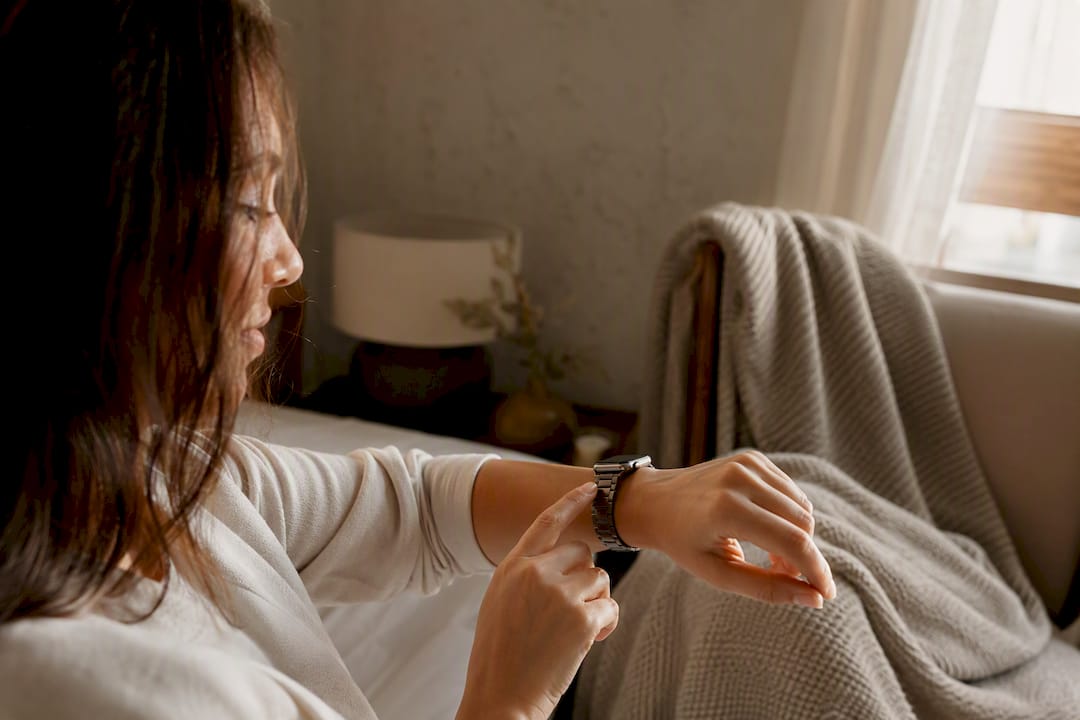
Breathable construction, whether through perforations in leather, an open weave in nylon, or a spacer lining behind metal links, keeps air moving against the skin. That single feature, according to one breakdown of comfort-driving band details, often matters more to everyday comfort than decorative elements like finish color or case size.
Clasp design deserves its own scrutiny. Cheap folding clasps create pinch points where the mechanism closes. A butterfly clasp or a micro-adjust system spreads that closing pressure and lets you fine-tune fit in small increments rather than jumping between fixed holes.
- Check for visible edge finishing in product photos before buying
- Look for a micro-adjust clasp instead of a single-position buckle
- Count removable links. More options mean a more precise fit for your exact wrist size
Pro Tip: Zoom into product photos before you buy. If you can see rounded, polished edges on the inside of the band rather than a flat stamped edge, that’s a strong sign the maker invested in comfort, not just looks.
Getting the Fit Right Matters More Than Any Single Material
Fit is the biggest lever you control, and it works in tandem with whatever material you’ve chosen. The one-finger test remains the standard: slide an index finger between the band and your wrist, and it should pass with light resistance. Apple’s fitting guidance suggests a slightly tighter fit, around three-quarters of a finger, during exercise, and a looser fit near one and a quarter fingers when you’re sitting through a long meeting or dinner.
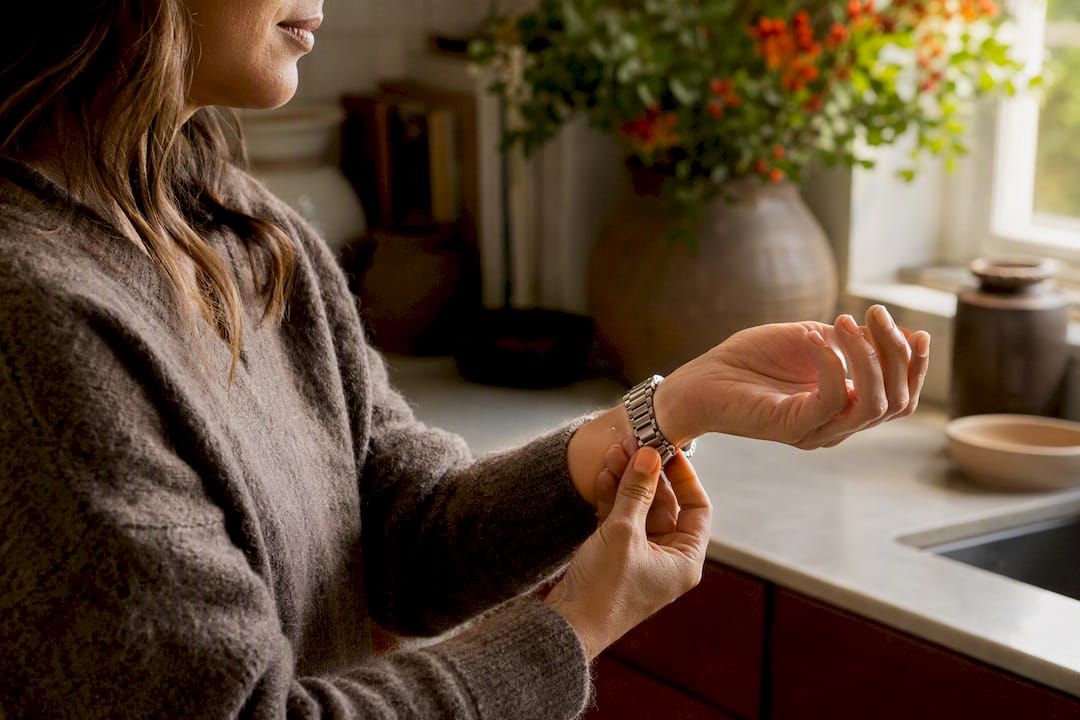
Band width and case proportions change how that test plays out. A watch with long lug-to-lug measurements can feel tight even when the band itself is sized correctly, because the case edges dig into the wrist before the band ever gets snug. TrueFacet’s fitting guide points out that lug-to-lug ratio, not case diameter, usually predicts comfort more reliably.
Three quick checks confirm whether your current fit is working:
- Shake test — the watch shouldn’t slide up and down your forearm when you shake your wrist
- Indentation test — remove the band after a few hours; light pressure marks are normal, but deep grooves signal it’s too tight
- Skin contact test — for smartwatches, the back sensor housing should sit flush against skin without gaps, since Google’s Pixel Watch guidance notes that loose contact during exercise skews heart rate readings
If the fit is off, you have options before buying a new band: use the micro-adjust clasp, remove or add links, or for leather and nylon, use a punch-and-trim adjustment. One survey cited by TrueFacet found that 68% of watch owners never adjust their band past its factory setting, which likely explains a lot of unnecessary daily discomfort.
Skin Reactions and Keeping Your Band Clean
Contact dermatitis from a watch band usually shows up as redness, itching, small bumps, or a rash that follows the exact shape of the band. If you notice persistent redness, numbness, or blistering, stop wearing the band and check with a clinician before continuing.
Hypoallergenic materials reduce this risk substantially. Silicone, titanium, and certain treated leathers are the safer bets for sensitive skin, while lower-grade plated alloys containing nickel are the most common trigger. Sweat and lotion residue both raise irritation risk by breaking down surface coatings faster, so wipe the band down regularly and let it fully dry before your next wear.
- Clean daily-wear bands at least once a week, more often during heavy sweating
- Rotate between two bands to give each one time to fully dry
- Add a thin liner if you notice early irritation but aren’t ready to switch materials
Pro Tip: A cotton liner between a metal band and your wrist can buy you a few weeks to figure out whether a reaction is from the metal itself or just from moisture buildup.
Quick Fixes for a Band That’s Bothering You Right Now
Most comfort problems don’t require a new purchase. Try these first:
- Reposition the watch slightly higher on your wrist, especially during exercise, since sitting closer to the wrist bone increases pressure on a small area
- Use the micro-adjust clasp if your band has one, moving in small increments rather than jumping a full link
- Switch wrists occasionally to give your dominant wrist a break from constant pressure
- Add a thin liner temporarily if a metal or leather band is causing friction
For leather specifically, expect a break-in period. Timex notes that leather straps typically conform over days to weeks, while metal and ceramic bands need accurate sizing upfront since they won’t stretch or soften.
- Tighten before a workout, loosen immediately after to prevent chafing and support accurate sensor readings
- Remove links yourself with a small pin pusher, or ask a jeweler to do it in minutes
- Swap to a silicone or nylon band before intense activity if your daily band is metal or leather
What to Check Before You Buy a New Band
Before adding a band to your cart, run through a short checklist that prioritizes comfort over marketing copy:
- Material specification — does the listing name the exact material (316L stainless steel, full-grain leather) or just say “premium”?
- Visible edge finishing — smooth, rounded edges in photos beat sharp stamped edges
- Micro-adjust availability — a butterfly clasp or ratchet system beats a single-position buckle
- Breathable construction — perforations, open weave, or spacer lining for all-day wear
- Listed weight — heavier bands fatigue the wrist faster over a full day
- Warranty or return policy — a maker confident in fit quality usually backs it with an easy return window
Skip listings that lean entirely on words like “luxury” or “premium” without backing them up with material specs or construction details.
A Practical Take on Style Versus Comfort
Face size gets all the attention in watch shopping, but fit and material do the real work of making a watch wearable for ten hours straight. Adjustability and finish quality matter more than trend-driven case sizing, which is exactly where well-built metal bands with fine-tune clasps earn their keep.
Where WizeBand Fits Into the Comfort Equation
Everything covered above, from finish quality to micro-adjust clasps to link-based sizing, is what separates a comfortable metal band from one you’ll regret buying. WizeBand builds its bands from 316L stainless steel with butterfly clasps and quick-adjust link systems specifically so you can fine-tune fit rather than settle for one of two buckle holes. The Metal Link Bands collection shows how removable links let you dial in the exact wrist circumference the fit checks above call for, and the Comfortable Watch Bands guide walks through which finishes suit all-day wear versus occasion pieces.
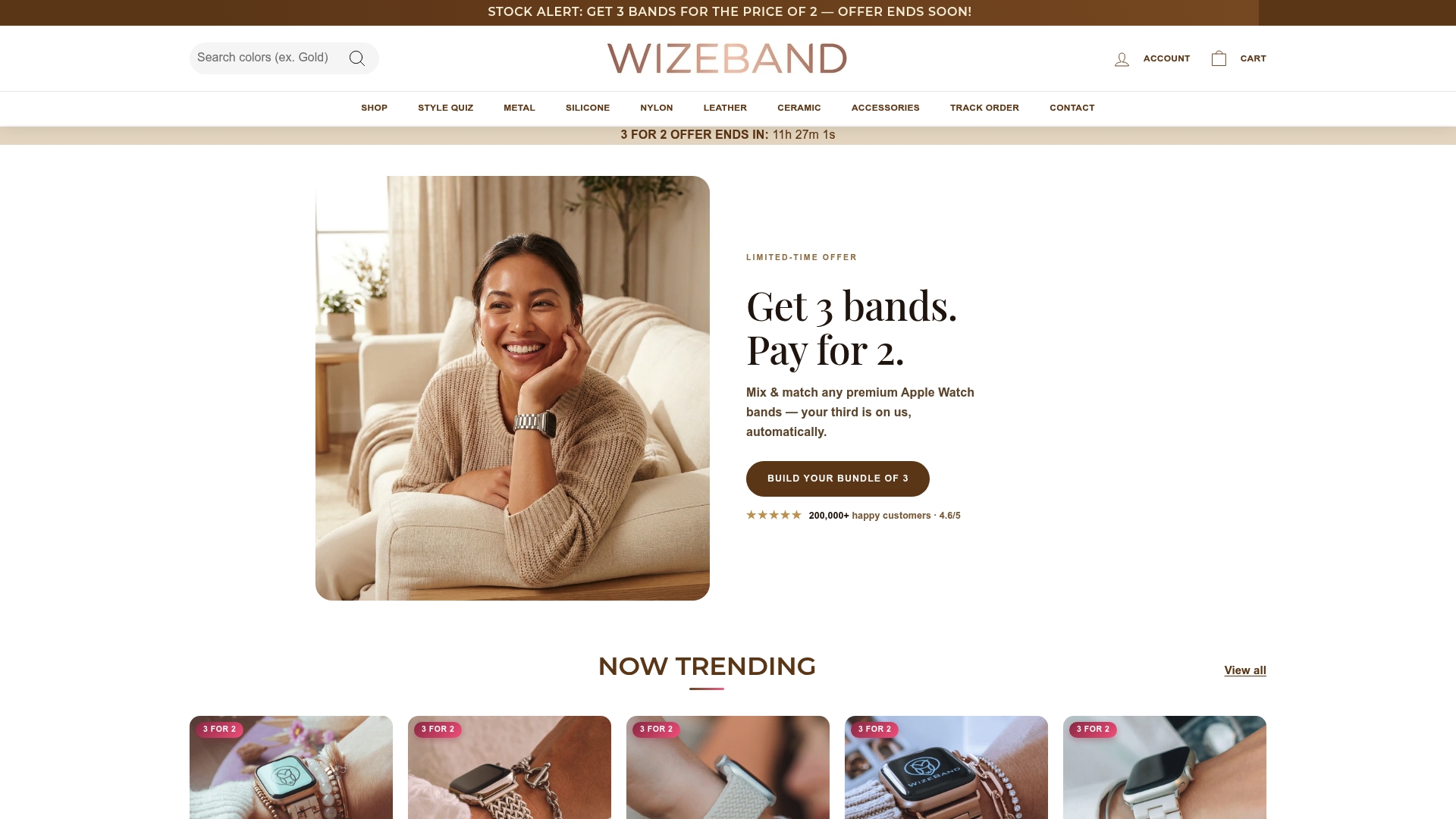
If you’re not sure which size or link count you need, the Watch Band Sizing Tool removes the guesswork, and the WizeBand Essentials Bundle gives you a low-commitment way to test more than one finish and fit before settling on your daily band.
Sources
- Wearing your Apple Watch - Apple Support
- Adjust and wear your Google Pixel Watch for comfort and sensor accuracy
- How Tight Should a Watch Be? Perfect Watch Fit Guide | TrueFacet
- What Makes a Watch Comfortable for All-Day Wear? — Timex Blog
- How tight is the watch? All wearing comfort tips!
Recommended
From the blog
View all


Leave a comment