


Polished Steel Watch Finish Explained for Buyers and Enthusiasts
A polished steel watch finish is a mirror-like, high-gloss surface applied to stainless-steel watch components to maximize reflectivity and visual contrast. You can identify it in three quick ways: it reflects a clear image of its surroundings, it shows fingerprints and smudges almost immediately, and close inspection reveals fine hairline scratches even on a well-maintained piece. The industry term for this treatment is a “mirror finish,” and it is one of the most common watch finish types used in both traditional watchmaking and modern metal band design.
Polished finishes appear on specific parts of a watch, not the entire case:
- Bezels (top face and chamfered edges)
- Case sides and mid-case flanks
- Center bracelet links (alternating with brushed outer links)
- Lugs (inner faces and chamfers)
- Dial rings and applied hour markers
Table of Contents
- What does a polished steel finish actually look like?
- How is a polished steel finish made?
- How does a polished finish compare with brushed and satin treatments?
- What are the real pros and cons of a polished steel finish?
- How do you maintain a polished steel watch?
- What do watchmakers and finishing experts warn about?
- Key Takeaways
- The case for choosing your finish carefully
- Get a polished-steel look on your Apple Watch
- Useful sources
What does a polished steel finish actually look like?
A polished surface behaves like a small mirror. Under direct light, it throws a sharp specular highlight, the kind of bright point that moves as you tilt the watch. Under diffuse or indoor lighting, it reads as a deep, dark surface with high contrast. That shift between bright and dark is what gives polished steel its formal, jewelry-like quality.
The optical difference between polished and brushed finishes is immediate: polished areas emphasize curves and contours, while brushed areas scatter light and appear flat. When a brand places a polished chamfer next to a brushed case flank, the contrast sharpens the watch’s geometry visually, making edges look crisper than they physically are.
Common locations where you will see polish used:
- Bezel face and edges: The most visible polished surface on most dress watches.
- Center bracelet links: Alternating polished centers with brushed outer links is a classic construction.
- Case chamfers and lugs: Polished inner lug faces catch light and add depth.
- Dial rings and hands: Polished surfaces here increase legibility by reflecting ambient light.
One practical note: polished areas photograph very differently than brushed ones. A polished surface will blow out or go completely dark depending on the angle, which is why watch photography almost always involves careful lighting control. For everyday wear, that same behavior means fingerprints and smudges are visible within minutes of handling. A microfiber wipe before a meeting is not optional with a fully polished case.
How is a polished steel finish made?
The process moves from coarse to fine, removing material progressively until the surface reaches mirror clarity. Here is the standard production sequence:
- Abrasive preparation. The surface is worked with progressively finer abrasive papers or stones, starting around 400-grit and moving through 800, 1200, and 2000-grit stages to remove machining marks.
- Intermediate compound polishing. A medium-cut polishing compound is applied with a felt or cloth wheel to remove the scratches left by the final abrasive stage.
- Final mirror buffing. A fine finishing compound (often chromium oxide or a proprietary paste) is applied with a soft buff to achieve the mirror surface.
- Inspection. The surface is checked under raking light for uniformity, edge crispness, and the absence of buffing halos near transitions.
Factory mirror finishes are measured technically. Surface roughness (Ra) and gloss units (GU) are the two standard metrics. A correct factory mirror finish sits between Ra 0.02–0.05 microns and reads 90 GU or above at 60°. As hairline scratches accumulate with wear, Ra rises and GU falls. That is the measurable difference between a fresh factory finish and a worn one.
| Surface condition | Ra (microns) | GU at 60° |
|---|---|---|
| Factory mirror finish | 0.02–0.05 | 90+ |
| Light wear (hairlines) | — | 60 |
| Heavy wear / poor re-polish | — | Below 50 |
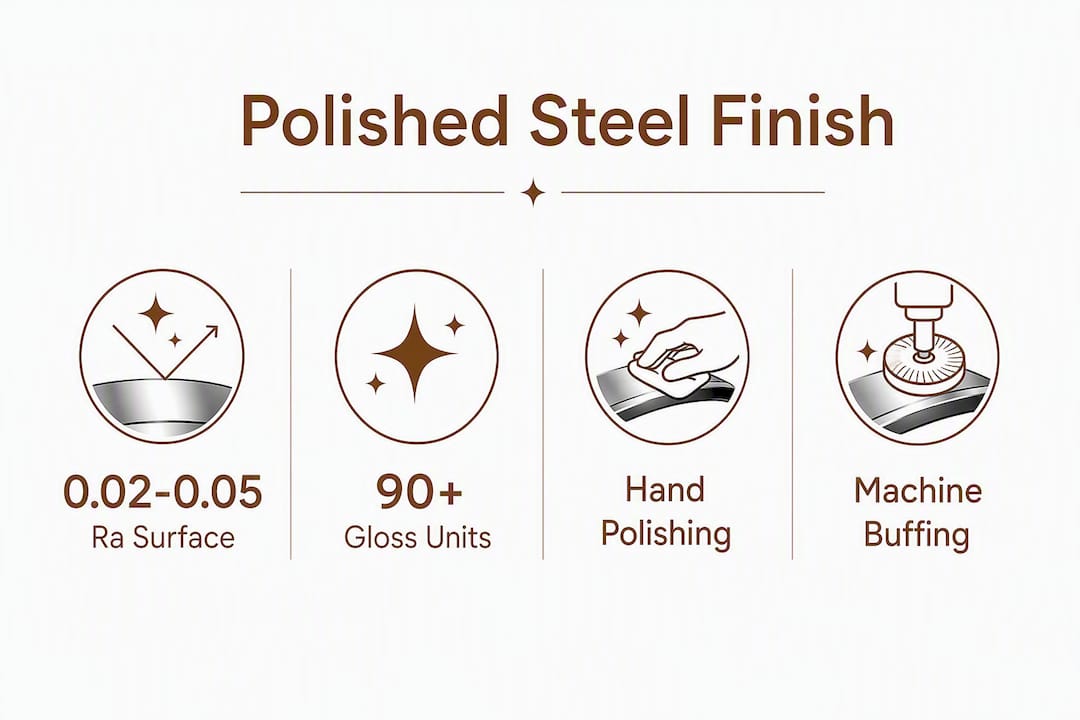
Hand polishing vs. machine buffing is a meaningful distinction. Hand polishing uses light, controlled pressure of approximately 0.2–0.5 kg per square centimeter and does not generate harmful heat, so the movement can usually stay inside the case during a careful touch-up. Machine buffing generates heat in the 40–60°C range, which can damage gaskets and lubricants. Machine work requires full disassembly to protect internal components.

Pro Tip: Before polishing any mixed-finish watch, mask brushed areas with painter’s tape. A polishing cloth that contacts a brushed surface will convert the directional grain into an irreversible shiny smear. Tape is cheap; re-brushing a case flank professionally is not.
How does a polished finish compare with brushed and satin treatments?
Most watches use a combination of finishes rather than a single one. Understanding why helps you evaluate any piece at a glance.
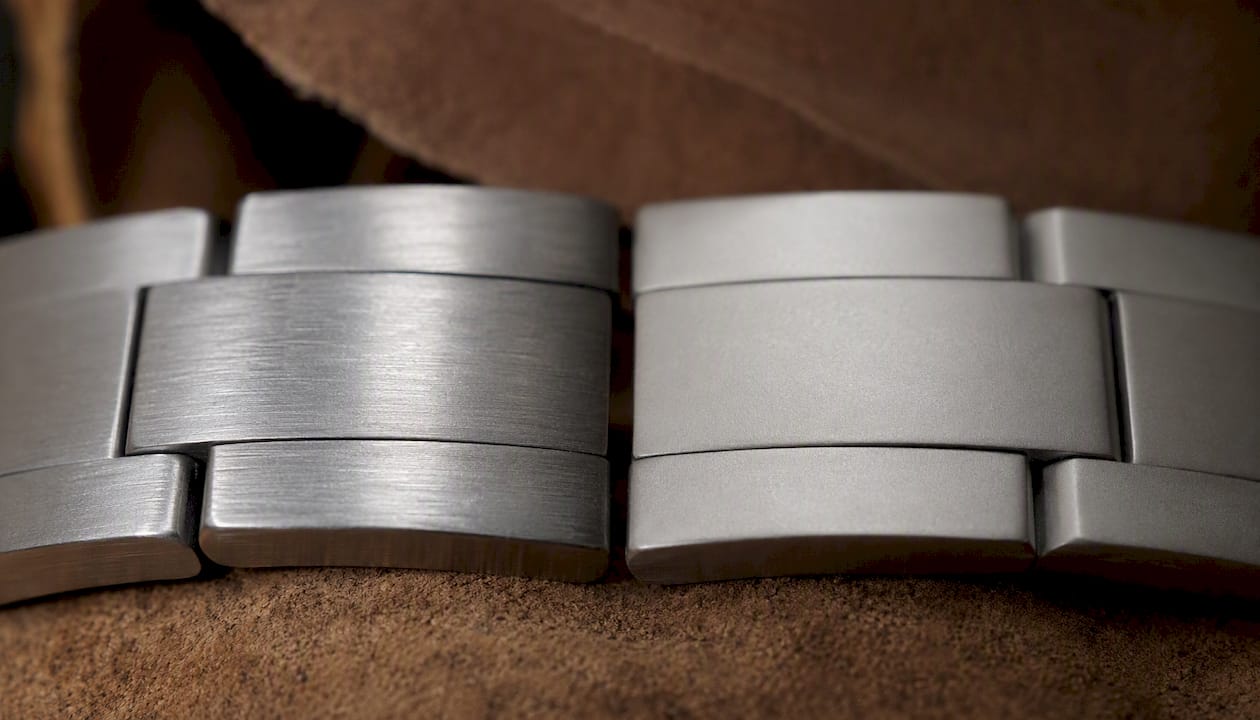
Brushed surfaces are common on case flanks, lugs, and outer bracelet links because their directional grain scatters light and hides daily scuffs. Tool watches favor brushed treatments for exactly this reason. Polished elements are then added for contrast, not as the dominant surface.
| Attribute | Polished finish | Brushed finish | Mixed finish |
|---|---|---|---|
| Appearance | Mirror-like, high contrast | Matte, directional grain | Layered depth, sharp geometry |
| Scratch visibility | High (hairlines show immediately) | Low (grain absorbs scuffs) | Moderate (depends on location) |
| Fingerprint behavior | Very visible | Less visible | Visible on polished areas only |
| Typical use case | Dress, formal, jewelry-style | Tool, sport, everyday | Most modern luxury watches |
| Maintenance demand | High (frequent wiping) | Low | Moderate |
The mixed-finish approach is deliberate. Polished chamfers next to brushed planes create a contrast that makes the watch’s geometry look sharper than it actually is. Losing that contrast through leveling or re-polishing reduces perceived sharpness, which is one reason collectors pay close attention to finish transitions.
A few visual identification tips for buyers:
- True brushed areas show a consistent, uniform grain running in one direction. Inconsistent grain or shiny patches signal amateur re-finishing.
- True polished areas reflect a clear, undistorted image. Distortion or cloudiness suggests a worn or improperly re-polished surface.
- Transitions between finishes should be crisp and clean. Blurring at the boundary is a sign of over-polishing.
What are the real pros and cons of a polished steel finish?
The formal, reflective quality of a polished finish is its primary appeal. It reads as jewelry, photographs well, and emphasizes the curves of a well-designed case. For dress watches and metal bands designed to look elegant, polish is the natural choice.
Advantages:
- High visual impact in formal settings
- Emphasizes case geometry and curves
- Photography-friendly under controlled lighting
- Conveys luxury and craftsmanship at a glance
Disadvantages:
- Hairline scratches are visible almost immediately
- Fingerprints and smudges require frequent wiping
- Higher maintenance than brushed alternatives
- Vulnerable to value loss from improper re-polishing
The value impact of polishing is where many buyers get surprised. Poor polishing is a leading cause of value loss in luxury watches. When a watch is machine-buffed without care, factory edges round off and bevels disappear. Those sharp transitions are not decorative; they are evidence of skilled hand-finishing. Once they are gone, they cannot be restored without significant rework.
Stainless steel itself is extremely durable. The metal retains structural integrity for decades in typical consumer environments; surface finish shows wear far sooner than the underlying metal changes. That gap between visual wear and structural wear is why finish care matters more than most buyers expect.
How do you maintain a polished steel watch?
Daily and weekly care keeps a polished surface looking sharp without the risks of repeated polishing.
Daily and weekly cleaning:
- Wipe polished surfaces with a dry microfiber cloth after each wear to remove fingerprints.
- For deeper cleaning, use a soft cloth with a small amount of mild dish soap diluted in water, then rinse with clean water and dry immediately to prevent water spots.
- Avoid paper towels, denim, or any abrasive fabric. They leave hairlines.
- Store metal bands away from other jewelry or hard surfaces that can cause micro-scratches.
Scratch-minimizing habits:
- Avoid contact with hard surfaces (countertops, keyboards, gym equipment) on the polished side.
- For daily wear, a mixed-finish or brushed-dominant band is a practical choice. Reserve fully polished pieces for formal occasions.
- Rotate between bands if you own multiple styles.
DIY polishing steps (light hairlines only):
- Clean the surface thoroughly and dry it completely.
- Mask all brushed areas with painter’s tape, covering every grain-finished surface.
- Apply a small amount of polishing compound (Cape Cod cloths work well for light hairlines) to a soft cloth.
- Work in short, straight strokes along the polished surface with light pressure. Keep pressure at approximately 0.2–0.5 kg/cm² — firm enough to feel, light enough to control.
- Wipe away residue with a clean microfiber cloth and inspect under raking light.
- Remove tape carefully and check that no compound has reached brushed areas.
When to go professional:
Seek a watchmaker or professional finishing service when you see visible edge rounding, loss of factory bevels, or deep scratches that a polishing cloth cannot address. Machine buffing at that stage requires disassembly to protect gaskets and the movement from heat. A light polish once or twice a year is often enough for a well-maintained piece; more frequent polishing accelerates edge wear.
Professional polishing costs vary by watchmaker, watch complexity, and region. Simple case and bracelet polishing at a reputable service center typically runs in the range of $50–$150 for a standard steel sports or dress watch. Full restoration involving re-brushing and re-polishing a complex case can run higher. Always ask whether the service includes disassembly and gasket replacement, since machine buffing without those steps risks internal damage.
Do not do list:
- Do not use toothpaste, baking soda, or household abrasive cleaners.
- Do not use a rotary tool or Dremel without professional training.
- Do not polish over brushed areas without masking.
- Do not attempt to re-polish a watch with significant edge rounding at home.
Pro Tip: Small hairlines on a polished surface are normal and often treated by collectors as a sign of genuine use. Seasoned enthusiasts accept light wear rather than risk softening factory edges through repeated polishing. If the hairlines bother you, a single careful pass with a Cape Cod cloth is safer than a full machine buff.
What do watchmakers and finishing experts warn about?
The consistent message from finishing professionals is that execution quality determines value more than finish type. A well-maintained brushed surface with crisp geometry is worth more than a heavily polished case with rounded edges.
Collectors and dealers use specific diagnostic checks to detect excessive or amateur re-polishing:
- Edge crispness: Factory edges are sharp and defined. Rounded or soft edges indicate machine buffing without care.
- Consistent grain direction: Brushed areas should show uniform grain running in one direction. Swirl marks or inconsistent direction signal amateur work.
- Absence of buffing halos: A halo or bright smear near a chamfer or transition line means the polishing cloth crossed into a brushed area.
- Transition line clarity: The boundary between polished and brushed surfaces should be a clean, sharp line. Blurring at that boundary is a red flag.
- Reflection quality: A true mirror finish reflects a clear, undistorted image. Cloudiness or orange-peel texture indicates a worn or improperly finished surface.
Pro Tip: When inspecting a used watch before purchase, hold it under a single point light source (a phone flashlight works) and tilt it slowly. Sharp, moving specular highlights on polished areas and uniform matte on brushed areas indicate original factory finishing. Soft, diffuse highlights everywhere, or bright smears near transitions, are signs of over-polishing.
Key Takeaways
A polished steel watch finish adds formal visual impact, but its long-term value depends entirely on how carefully it is maintained and, when needed, restored.
| Point | Details |
|---|---|
| Definition and metrics | A mirror finish reads Ra 0.02–0.05 microns and 90+ GU at 60°; both decline as hairlines accumulate. |
| Where polish appears | Bezels, case chamfers, center bracelet links, and lug inner faces are the most common locations. |
| Main trade-off | High visual impact but high scratch and fingerprint visibility; brushed areas on the same watch hide daily wear. |
| Maintenance headline | Wipe daily with microfiber, DIY only light hairlines with gentle pressure, and seek a professional for edge rounding or deep scratches. |
| Value impact warning | Over-polishing rounds factory edges and removes bevels; crisp transitions matter more to collectors than finish type. |
| Wizeband option | Wizeband’s 316L stainless steel bands offer polished and mixed-finish options that deliver a jewelry-like look with practical daily durability. |
The case for choosing your finish carefully
There is a tendency in watch communities to treat polishing as a restoration tool, something you do when a watch looks worn. That framing gets the priority backwards. The factory finish on a well-made watch is the result of skilled hand-finishing that took more time than the movement assembly in many cases. Polishing it away, even with good intentions, removes that work permanently.
The more useful frame is this: a polished finish is a design choice, not a maintenance default. If you bought a watch with polished chamfers and brushed flanks, the goal of maintenance is to preserve that contrast, not to make the whole case shine. Light hairlines on brushed areas are invisible by design. Light hairlines on polished areas are normal and accepted by most collectors as evidence of real use.
For Apple Watch owners, the same logic applies to metal bands. A band with polished center links and brushed outer links gives you the jewelry-like gloss of a polished finish where it reads best, while the brushed surfaces absorb the daily contact scratches that would ruin a fully polished surface. That is not a compromise; it is the same design decision that luxury watchmakers have used for decades.
The one thing worth avoiding at all costs is frequent machine polishing to chase a perfect mirror surface. Every pass removes metal and softens geometry. A watch with original factory edges and a few honest hairlines is in better condition, by any collector’s standard, than a heavily buffed piece with rounded lugs and blurred transitions.
Get a polished-steel look on your Apple Watch
The jewelry-like appeal of a polished steel finish does not require a traditional watch. Wizeband’s metal bands for Apple Watch are built from 316L stainless steel, the same grade used in quality watch cases, and several styles feature polished center links paired with brushed outer links for exactly the contrast that makes a finish look intentional rather than uniform.

The Goran Stainless Band and the Gaia Metal Strap both deliver that mixed-finish construction in a band compatible with Apple Watch Series 4–10, SE, and Ultra 2. For care, the same rules apply: wipe polished links daily with a microfiber cloth, avoid abrasive contact, and the 316L steel will hold its surface far longer than lower-grade alloys. If you want to try multiple styles, the WizeBand Essentials Bundle lets you compare finishes side by side before committing to a single look.
Useful sources
- Fondation de la Haute Horlogerie: Watch Finisher Techniques — Authoritative overview of polishing, satin brushing, and other finishing techniques from the industry’s leading educational body.
- Brushed vs Polished Watch Finishes: What’s the Difference — Clear side-by-side comparison of optical behavior, scratch visibility, and use-case guidance for each finish type.
- How to Polish a Stainless Steel Watch, by Hand (Buhron) — Technical detail on Ra and GU metrics, hand vs. machine polishing pressure, and heat risks. Read before attempting any DIY work.
- Watch Finishing Explained: A Practical Beginner’s Guide (Hewore) — Good entry point for understanding finish types, collector attitudes toward hairlines, and when professional intervention is warranted.
- How Long Does Stainless Steel Last (Click Metal) — Background on structural longevity vs. surface wear for stainless steel; useful context for understanding why finish care matters more than material durability.
Recommended
From the blog
View all


Leave a comment